
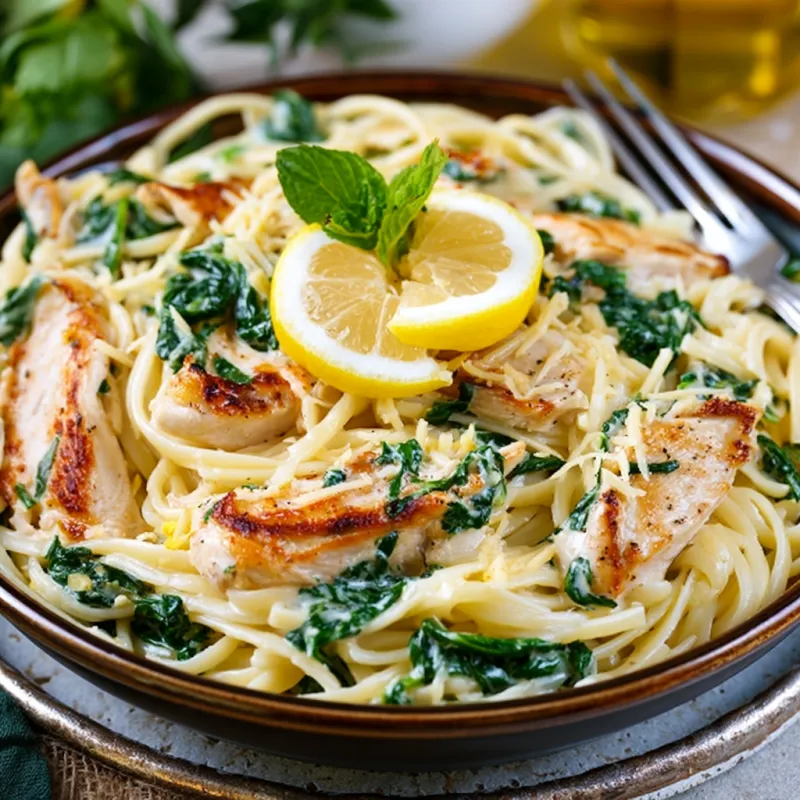
When I make this Lemon Spinach Chicken Pasta, the kitchen fills with the sharp, clean scent of lemon zest hitting warm oil. It’s the kind of aroma that promises something bright and satisfying—not heavy, not dull. This is a one-pan dinner that comes together in about 30 minutes, and the sauce achieves its creamy texture without a drop of heavy cream. The secret? A simple combination of whole milk, good Parmesan, and the starchy pasta water you reserve before draining.

Why This Method Works
The technique here is about building layers of flavor in a single skillet. You start by searing the chicken until golden—that browning creates a fond on the pan bottom that will later dissolve into the sauce, adding savory depth. Then you cook the garlic just until fragrant, deglaze with broth and lemon juice, and finish with milk and cheese. The spinach goes in last, wilting in the residual heat. The pasta and chicken return to the pan, and everything gets a final toss. By cooking the pasta separately and undercooking it by a minute, you avoid a gummy texture—the pasta finishes cooking in the sauce, absorbing just enough liquid to stay tender but firm.
Key Ratios and Timing
I keep the ratio at 8 ounces of pasta to 1 pound of chicken, with 1/2 cup of milk and 1/3 cup of Parmesan. That gives you a sauce that coats each piece without pooling. The lemon juice—3 tablespoons from one medium lemon—provides acidity that balances the richness of the dairy and chicken. One teaspoon of zest adds aromatic punch without bitterness. If you want more lemon flavor, add zest, not more juice, or the sauce can break.
Doneness Cues at Every Stage
- Chicken: The surface should be deep golden brown with crispy edges. Internal temperature must read 165°F (74°C) on an instant-read thermometer inserted into the thickest part.
- Garlic: It should be fragrant and just starting to turn golden at the edges—about 30 seconds. Burnt garlic turns bitter, so watch closely.
- Sauce: After adding the milk and Parmesan, the sauce should be thin enough to coat a spoon but not watery. It will thicken slightly as it simmers and more as it coats the pasta.
- Spinach: Wilted but still bright green, not mushy. This takes about 1 to 2 minutes of tossing.
Common Mistake to Avoid
The most common error is adding the spinach all at once when the pan is too hot. The leaves can scorch before they wilt, creating a bitter, uneven texture. Instead, add the spinach in two handfuls, tossing each batch with tongs until it begins to soften before adding the next. The residual heat from the sauce is usually enough; you don’t need to crank the heat.
Adapting the Recipe
This recipe is flexible. If you prefer a dairy-free version, unsweetened oat milk or full-fat canned coconut milk works well—just note the coconut flavor will come through. Omit the Parmesan or use a vegan alternative. For a gluten-free pasta, choose a sturdy shape like penne or fusilli; cook it 1 minute less than the package directs. Always check your broth and Parmesan labels for gluten if that’s a concern.
Short Takeaway
This Lemon Spinach Chicken Pasta is a weeknight workhorse. It’s fast, uses one pan, and the sauce is creamy without cream. The key is reserving pasta water, searing the chicken well, and adding spinach in batches. For any specific dietary needs or health concerns, please consult a qualified professional.
Frequently Asked Questions
Can I use heavy cream instead of milk?
Yes, you can substitute heavy cream for the whole milk. The sauce will be thicker and richer. Use the same amount (1/2 cup) and skip the Parmesan if you prefer a lighter cheese flavor, though I find the combination lovely.
How do I keep the chicken from drying out?
Pat the chicken dry before seasoning—this helps it brown, not steam. Cook over medium-high heat, not lower, and use an instant-read thermometer to pull it off at exactly 165°F (74°C). Resting the chicken for 5 minutes before slicing locks in the juices.
Can I make this gluten-free?
Absolutely. Use your favorite gluten-free pasta—brown rice or chickpea-based works well. Cook it according to package directions but still undercook by 1 minute. The sauce is naturally gluten-free as written. Double-check your chicken broth and Parmesan labels for gluten-containing additives.
Why is my sauce grainy?
Grainy sauce usually means the Parmesan was added too quickly over high heat, or you used pre-shredded cheese (which contains anti-caking agents that don’t melt smoothly). Use finely grated Parmesan from a block, add it off the heat or over low heat, and stir gently until smooth.
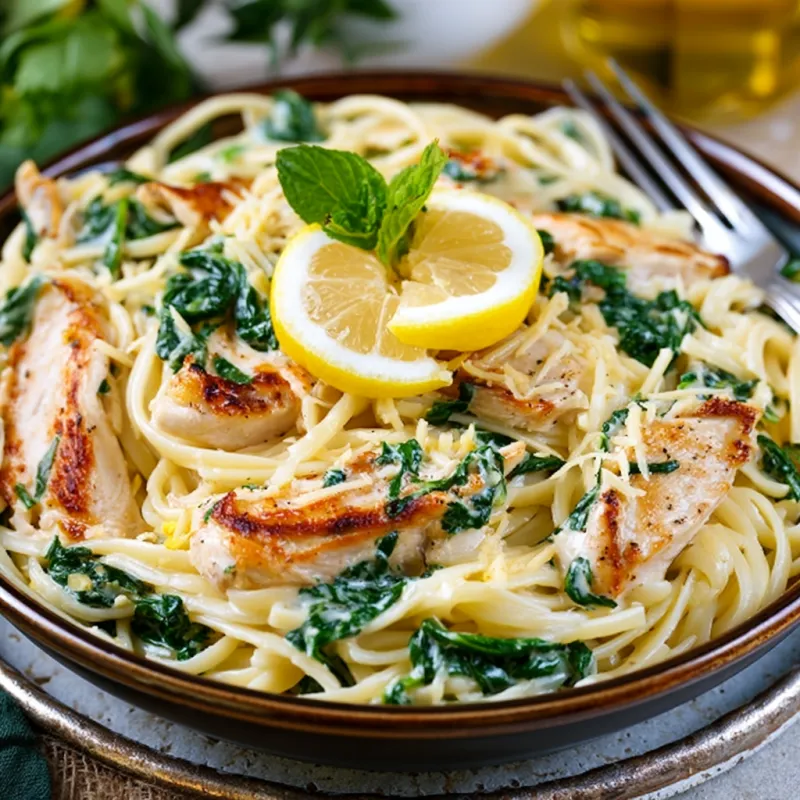
Lemon Spinach Chicken Pasta
Ingredients
Equipment
Method
- Bring a large pot of salted water to a boil. Cook pasta 1 minute less than package directions for al dente. Reserve 1/2 cup pasta water before draining. Drain and set aside.
- While pasta cooks, pat chicken dry with paper towels. Season both sides with 1/2 teaspoon salt and 1/4 teaspoon black pepper.
- Heat olive oil in a large deep skillet over medium-high heat until shimmering. Add chicken breasts and cook 5-6 minutes per side, until golden brown and internal temperature reaches 165°F (74°C) on an instant-read thermometer. Transfer to a cutting board and let rest 5 minutes, then slice crosswise into 1/2-inch strips.
- Reduce heat to medium. Add garlic and red pepper flakes to the skillet. Cook 30 seconds until fragrant, stirring constantly to prevent burning.
- Pour in chicken broth and lemon juice. Scrape up any browned bits from the bottom of the pan with a wooden spoon. Let simmer 1 minute.
- Whisk in milk and lemon zest. Bring to a gentle simmer, then stir in Parmesan until melted and smooth. The sauce will be thin at this point.
- Add spinach to the skillet. Toss with tongs for 1-2 minutes until just wilted.
- Add drained pasta and sliced chicken to the skillet. Toss everything together. If the sauce seems too thick, add reserved pasta water a tablespoon at a time until it coats the pasta nicely. Taste and adjust salt and pepper.
- Serve immediately with extra Parmesan and a pinch of lemon zest on top.
Notes
Substitutions: For a dairy-free version, use unsweetened oat milk or canned coconut milk (full-fat) and omit Parmesan or use a vegan Parmesan-style cheese. Use gluten-free pasta if needed.
Safety: Always cook chicken to an internal temperature of 165°F (74°C). Wash hands and surfaces after handling raw chicken. Keep hot oil away from children and pets.