
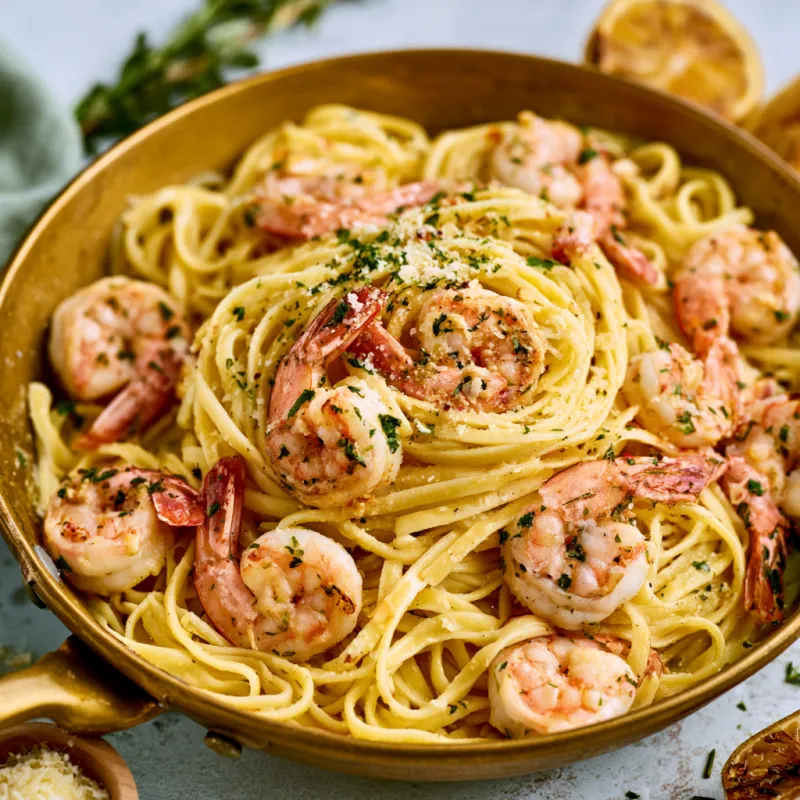
The smell of garlic hitting hot butter is the kind of kitchen promise that never gets old. When that first sizzle rises, you know something good is about to happen. Shrimp scampi pasta is one of those dishes that looks like you fussed — but really, it’s just a smart sequence of quick moves. The trick is in the timing: pasta and shrimp come together in the same window, and the sauce comes together in the skillet while the pasta finishes cooking. No cream, no flour, no fuss. Just butter, garlic, wine, lemon, and a little pasta water to bind it all into a silky gloss.

Why This Method Works
Most shrimp scampi recipes are either too greasy or too watery. The fix is a two-step fat technique: you start with a blend of butter and olive oil. Butter gives flavor, olive oil raises the smoke point so nothing burns. I keep the ratio at 2 tablespoons of each for the shrimp, then add another 2 tablespoons of butter for the sauce. That sounds like a lot, but remember — you’re not eating the fat alone. It emulsifies with the wine and pasta water into a thin, coating sauce.
The garlic matters too. Thinly sliced (not minced) means it cooks evenly and doesn’t turn bitter. Minced garlic burns faster and can leave a harsh taste. Sliced garlic softens into sweet, buttery morsels that melt into the sauce.
The Pasta Water Secret
This is the single most important technique for any pasta dish. Before you drain the pasta, scoop out a full cup of the starchy cooking water. That starch is what makes the sauce cling to the noodles instead of pooling at the bottom of the bowl. Add it a little at a time — start with ¼ cup, toss, and watch the sauce tighten. If it looks thin, add another tablespoon. You want the pasta to look glossy, not soupy.
Cook the pasta to one minute less than al dente. It will finish cooking in the hot skillet with the sauce, absorbing flavor without turning mushy. This is called “finishing in the sauce,” and it’s the difference between a dish that tastes separate and one that tastes whole.
Getting the Shrimp Right
Shrimp release a lot of water as they cook. If you crowd the pan, they steam instead of sear. The result is gray, rubbery shrimp with no color. Always pat shrimp dry with paper towels before seasoning. Cook them in a single layer — if your skillet is small, do two batches. It takes an extra two minutes and makes a world of difference.
Look for the visual cue: the bottom of each shrimp should turn pink with a golden-brown edge after about 90 seconds. Flip and cook just until the center is opaque. They will finish cooking when you toss them back into the sauce, so pulling them a moment early is better than a moment late.
Common Mistake: Overcooking the Garlic
Garlic goes from fragrant to acrid in about 15 seconds. After you remove the shrimp, the skillet will still be hot. Add the remaining butter and olive oil, then the sliced garlic. Stir constantly. The moment it turns pale gold — about 30 to 45 seconds — pour in the wine. That liquid stops the cooking immediately and saves the garlic from burning.
The Sauce: Simple but Precise
White wine and lemon juice are the only liquids in the sauce (besides the pasta water). Use a dry white wine — something you’d drink, not “cooking wine” from a bottle. Sauvignon Blanc or Pinot Grigio work well because they’re crisp and not too oaky. The alcohol cooks off, leaving behind acidity and fruitiness that balances the butter.
Let the wine and lemon simmer for a full 2-3 minutes. You want it to reduce by about half. This concentrates the flavor and removes the raw alcohol edge. While it simmers, scrape up any browned bits from the bottom of the pan — that’s called fond, and it’s pure flavor from the shrimp and butter.
Bringing It All Together
Add the drained pasta, the cooked shrimp, and a splash of pasta water. Toss with tongs for one to two minutes. You’ll see the sauce change from a thin liquid to a glossy coating that clings to each strand. If it looks dry, add more pasta water. If it looks too wet, let it cook another 30 seconds. The pasta will absorb the excess.
Finish with fresh parsley — not dried. Dried parsley has no place here. The fresh stuff adds a clean, grassy note that cuts through the richness. A little lemon zest on top is optional but brightens everything further.
The Takeaway
Shrimp scampi pasta is a weeknight hero because it asks for exactly one skillet, one pot, and twenty minutes. The technique is straightforward, but each step matters: dry the shrimp, don’t crowd the pan, save the pasta water, and never let the garlic burn. Follow that sequence, and you’ll have a plate of pasta that tastes like you spent an hour on it. You didn’t. That’s the point.
Frequently Asked Questions
Can I use frozen shrimp for this recipe?
Yes. Thaw frozen shrimp overnight in the refrigerator or place them in a colander under cold running water for about 10 minutes. Pat them very dry with paper towels before cooking. Wet shrimp will steam instead of sear, so drying is critical for that golden-brown exterior.
What if I don’t have white wine?
You can substitute an equal amount of low-sodium chicken broth or vegetable broth mixed with 1 tablespoon of lemon juice. The wine adds acidity and depth, but broth with extra lemon works well. For a non-alcoholic version, use broth entirely and skip the wine.
Why is my sauce watery?
A watery sauce usually means the pasta water was added too quickly or in too large a quantity, or the sauce didn’t reduce enough before adding the pasta. Always add pasta water a little at a time — start with 1/4 cup and toss for a minute before adding more. The starch from the pasta water helps thicken the sauce naturally.
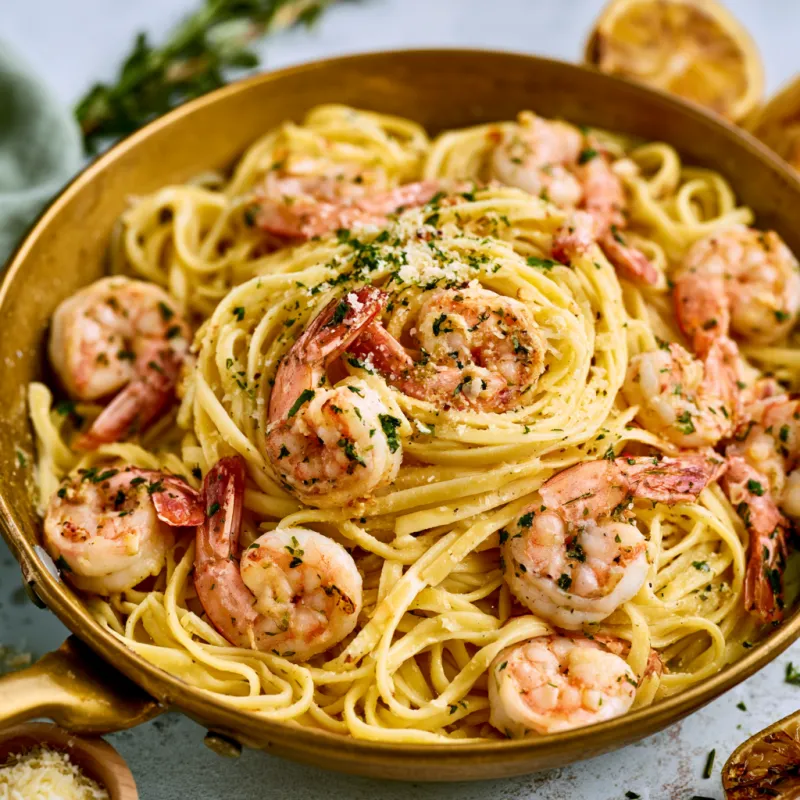
Shrimp Scampi Pasta
Ingredients
Equipment
Method
- Bring a large pot of generously salted water (about 1 tablespoon salt per 4 quarts water) to a rolling boil. Add pasta and cook until 1 minute less than al dente (about 8-9 minutes for most dry pasta). Reserve 1 cup of pasta water before draining. Drain pasta (do not rinse).
- While pasta cooks, pat shrimp dry with paper towels. Season with a pinch of salt and pepper.
- In a large 12-inch skillet, heat 2 tablespoons butter and 2 tablespoons olive oil over medium-high heat until butter melts and sizzles. Add shrimp in a single layer (work in batches if needed). Cook undisturbed for 1-2 minutes until bottoms are pink and lightly browned. Flip and cook 1 minute more until opaque throughout. Transfer shrimp to a plate (they will finish cooking later).
- Reduce heat to medium. Add remaining 2 tablespoons butter and 1 tablespoon olive oil to the skillet. Add sliced garlic and red pepper flakes. Cook, stirring constantly, for 30-45 seconds until fragrant and garlic is just golden — do not let it burn.
- Pour in white wine and lemon juice. Increase heat to medium-high and bring to a simmer. Scrape up any browned bits from the bottom of the pan (this is flavor). Simmer for 2-3 minutes until the liquid reduces by about half.
- Add the drained pasta, cooked shrimp (and any accumulated juices), and 1/4 cup of the reserved pasta water. Toss gently with tongs for 1-2 minutes until the sauce coats the pasta and thickens slightly. If the pasta seems dry, add more pasta water 1 tablespoon at a time.
- Remove from heat. Toss in chopped parsley. Taste and adjust salt and pepper. Serve immediately, garnished with lemon zest if desired.