
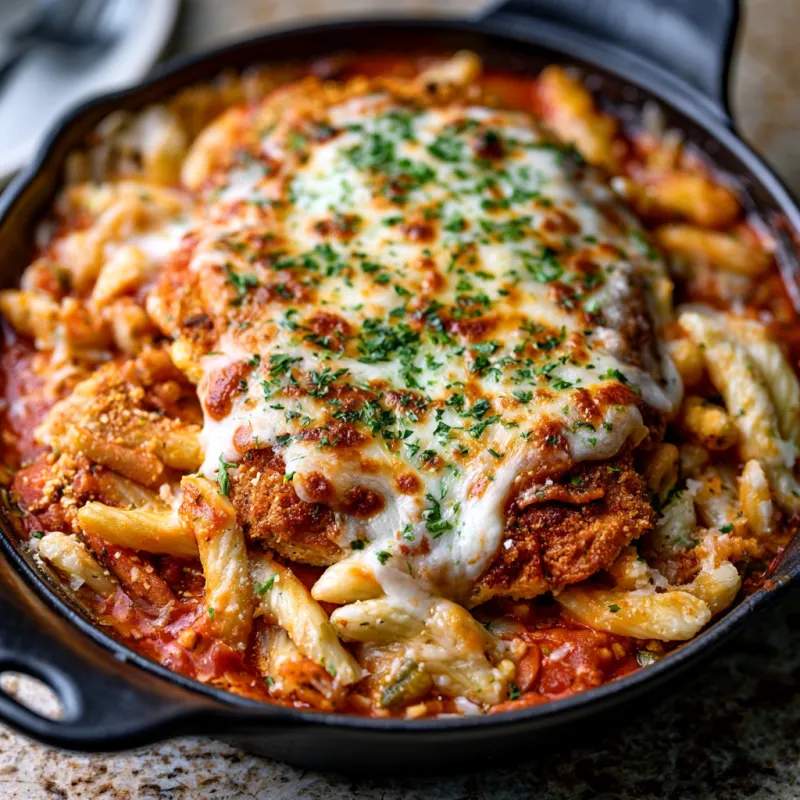
There’s something about that first crackle when you slide the breaded chicken into hot olive oil. The sizzle, the immediate golden edge creeping up the side. That sound, paired with the smell of garlic and oregano blooming in the pan, is the reason I reach for this chicken parmesan pasta on busy nights. It’s one skillet, a few bowls for the breading station, and about 40 minutes from start to a dinner that feels like a reward.

This isn’t a separate-chicken-then-pasta-then-bake affair. Everything comes together in the same pan. The chicken gets its crispy coating, you build the sauce right in the browned bits, and the pasta cooks directly in that tomato-broth mixture, absorbing all the flavor. The mozzarella goes on top for a quick broil, and you eat straight from the skillet—no extra dishes. Here’s how to get it right every time.
The Chicken: Thin, Even, and Properly Breading
Start with two boneless, skinless chicken breasts. The key is pounding them to an even ½-inch thickness. Place each breast between two sheets of plastic wrap and use a rolling pin or heavy skillet to flatten. You want an even surface so the chicken cooks through in the same time it takes to brown. Uneven thickness means burnt edges or raw centers.
Pat the chicken dry with paper towels. Moisture is the enemy of a crispy crust. Set up a three-part breading station: flour seasoned with garlic and onion powder, a beaten egg with a splash of water, and panko mixed with grated Parmesan. The Parmesan in the breadcrumb adds a nutty, salty crunch that plain panko can’t match. I keep the ratio at 1 cup panko to ½ cup Parmesan. That’s enough for two large breasts.
Dredge each piece in the flour first, shaking off the excess. Then the egg, letting any drip off. Finally, press firmly into the panko mixture, coating both sides and the edges. Set on a plate. The breading should feel dry to the touch—if it feels wet or clumpy, you’ve left too much egg.
Frying: Golden, Not Burnt
Heat 2 tablespoons of olive oil in a large oven-safe skillet over medium-high heat. The oil is ready when a breadcrumb dropped in sizzles immediately. Lay the breaded chicken in the skillet—do not crowd. If your skillet is 12 inches, two large breasts should fit comfortably. If they touch, cook in two batches.
Cook for 3 to 4 minutes on the first side. The crust should be deep golden brown, not pale. Flip carefully with tongs and cook another 3 to 4 minutes. The internal temperature should read 165°F on an instant-read thermometer. Transfer to a plate and tent loosely with foil. The carryover heat will keep it warm and finish cooking any slightly underdone spots.
The Sauce: Build on the Browned Bits
Reduce the heat to medium. Add the remaining olive oil and a tablespoon of butter. The butter adds a silky finish to the sauce. Once it melts, add the diced onion and cook until translucent, about 3 to 4 minutes. Stir in the minced garlic and cook just until fragrant—30 seconds is enough. Garlic burns quickly and turns bitter.
Pour in the crushed tomatoes. I use a 28-ounce can of good-quality crushed tomatoes—no need for a whole tomato sauce or paste. Add dried oregano and basil. The red pepper flakes are optional, but a pinch adds a warmth that balances the richness of the cheese. Stir and scrape up the browned bits from the bottom of the pan. Those bits are pure flavor. Let the sauce simmer for 2 minutes, just to meld.
The Pasta: Cook It in the Sauce
Add the dried pasta directly to the skillet. Use a short shape like penne or rigatoni—they hold the sauce well and cook evenly. Pour in 2 cups of low-sodium chicken broth. Stir to combine. Bring to a simmer, then reduce the heat to medium-low, cover, and set a timer for 12 minutes.
Stir the pasta twice during cooking to prevent sticking and ensure even absorption. After 12 minutes, check the pasta. It should be al dente—firm to the bite—and most of the liquid should be absorbed. If it’s still too soupy, cook uncovered for another 2 minutes. If it’s dry before the pasta is done, add a splash of broth or water. Every brand of pasta absorbs liquid differently, so trust your eyes and your fork.
Assemble and Broil
While the pasta cooks, preheat the broiler with a rack about 6 inches from the heat. Slice the rested chicken into ½-inch strips. Arrange them over the cooked pasta in a single layer. Lay the fresh mozzarella slices on top of the chicken. Fresh mozzarella melts into creamy, stretchy pockets—don’t use pre-shredded, which contains anti-caking agents and won’t melt as smoothly.
Slide the skillet under the broiler for 2 to 3 minutes. Watch closely. You want the cheese bubbly with golden brown spots, not burnt. Remove from the oven and let rest for 2 minutes. The sauce will settle and the cheese will set slightly, making it easier to serve.
Serving and Storage
Garnish with fresh basil chiffonade and a generous grating of Parmesan. Serve directly from the skillet—it stays warm longer and looks impressive with minimal effort. Leftovers keep in an airtight container in the refrigerator for up to 3 days. Reheat in a skillet over medium-low heat with a splash of broth, covered, for 5 to 7 minutes. The chicken will lose its crispness, but the flavor remains. I don’t recommend freezing this dish; the pasta and sauce texture changes after thawing.
The Takeaway
This chicken parmesan pasta is a true one-pan meal. The chicken stays crispy on the outside, tender inside. The pasta absorbs the tomato broth, becoming deeply flavored. The mozzarella melts into a golden blanket. And the whole thing comes together with a single skillet and a few bowls. That’s the kind of weeknight dinner I keep coming back to.
Frequently Asked Questions
Can I use pre-made chicken tenders or frozen breaded chicken?
Yes, you can use fully cooked frozen breaded chicken tenders or cutlets to save time. Bake or air fry them according to package directions, then slice and add to the pasta in step 9. Skip the breading and frying steps (1-4), but note the texture will be slightly different.
What pasta shape works best?
Short, sturdy pasta shapes like penne, rigatoni, fusilli, or ziti work best because they hold up to the sauce and the one-pan cooking method. Avoid long pasta like spaghetti or linguine, as they won’t cook evenly in the skillet.
Can I make this ahead of time?
You can prepare the sauce and cook the chicken up to 2 days ahead. Store separately in the fridge. When ready to serve, reheat the sauce in the skillet, add broth and pasta, and cook as directed. Slice the chicken and broil with cheese at the end. The pasta will be freshest if cooked just before serving.
How do I prevent the pasta from becoming mushy?
Cook the pasta in the sauce just until al dente—about 1-2 minutes less than the package directions. The pasta will continue to absorb liquid as it rests and during broiling. Stir twice during simmering to prevent sticking. If the sauce seems dry before the pasta is done, add a splash of broth or water.
Can I use a different cheese for the topping?
Fresh mozzarella gives the best melt and mild flavor. You can substitute low-moisture mozzarella (shredded) or provolone. For a sharper flavor, mix in some grated Pecorino Romano. Avoid using only Parmesan on top, as it won’t melt smoothly.
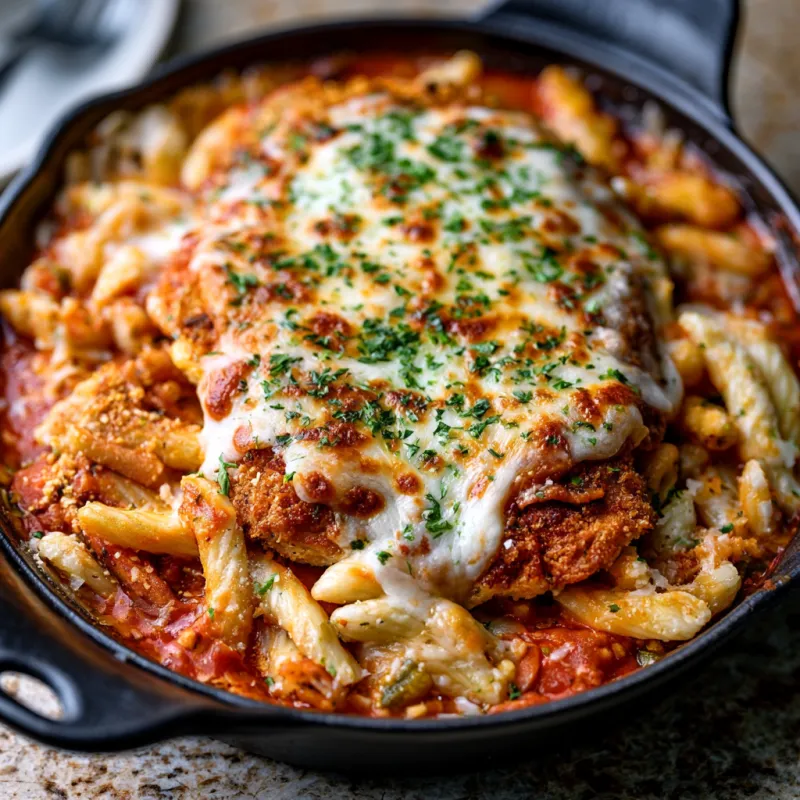
Chicken Parmesan Pasta
Ingredients
Equipment
Method
- Place chicken breasts between two sheets of plastic wrap and pound to an even 1/2-inch thickness with a rolling pin or heavy skillet. Pat dry with paper towels.
- In a shallow bowl, whisk together flour, garlic powder, onion powder, salt, and pepper. In a second bowl, beat the egg with water. In a third bowl, mix panko and 1/4 cup Parmesan.
- Dredge each chicken piece first in the flour mixture (shake off excess), then dip in the egg mixture, then press into the panko-Parmesan mixture, coating both sides evenly. Set on a plate.
- Heat 2 tablespoons olive oil in a large oven-safe skillet over medium-high heat until shimmering. Add the breaded chicken (work in batches if needed—do not overcrowd). Cook 3-4 minutes per side, until golden brown and internal temperature reaches 165°F. Transfer to a plate and tent with foil.
- Reduce heat to medium. Add remaining 1 tablespoon olive oil and butter to the skillet. Once butter melts, add onion and cook 3-4 minutes until softened. Add garlic and cook 30 seconds until fragrant.
- Stir in crushed tomatoes, oregano, basil, and red pepper flakes (if using). Scrape up any browned bits from the bottom. Cook 2 minutes, stirring occasionally.
- Add the pasta and chicken broth to the skillet. Stir to combine. Bring to a simmer, then reduce heat to medium-low, cover, and cook 12-14 minutes, stirring twice, until pasta is al dente and most liquid is absorbed. If too dry, add a splash of broth or water.
- While pasta cooks, preheat the broiler with a rack about 6 inches from the heat source.
- Slice the cooked chicken breasts into 1/2-inch strips. Arrange the strips on top of the pasta. Lay mozzarella slices over the chicken.
- Transfer the skillet to the oven and broil 2-3 minutes, until cheese is melted and bubbly with golden spots. Watch closely to avoid burning.
- Remove from the oven, let rest 2 minutes. Garnish with fresh basil and extra Parmesan. Serve directly from the skillet.