
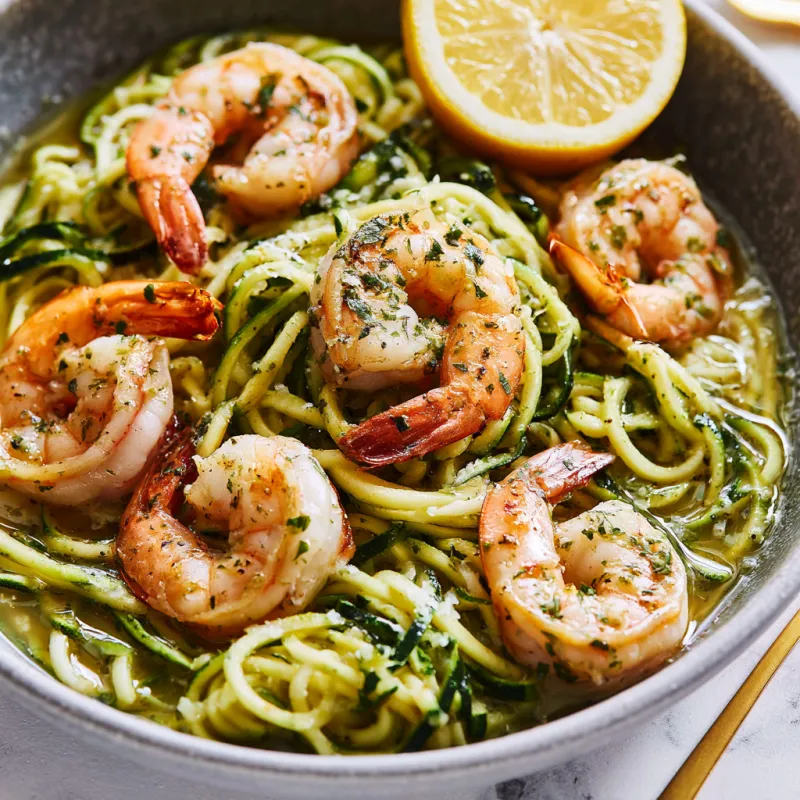
The first time I made zucchini noodles, I ended up with a watery, sad puddle. The shrimp were fine, but the zoodles? A soggy mess. That’s when I learned the single most important step: salting the zucchini first. It’s not optional—it’s the difference between a dish that holds its texture and one that collapses into soup.

This lemon garlic shrimp zoodles recipe is my weeknight answer to something that feels indulgent but takes only 15 minutes. The shrimp get a quick sear in butter until pink and plump. The garlic slices sizzle and soften. The zoodles just warm through, still with a slight bite. And that lemon—bright, fresh, cutting through the richness—ties it all together.
Here’s the thing: you don’t need a fancy spiralizer. A julienne peeler works, or even a vegetable peeler to make wide ribbons. The technique matters more than the tool. And the technique is all about moisture management.
Why Salting Zucchini Noodles Changes Everything
Zucchini is mostly water. When you heat it, that water releases. If it goes straight into the pan, it steams the noodles and dilutes the sauce. Salting draws out that moisture before cooking. Here’s my exact method:
After spiralizing, toss the noodles with 1 tablespoon of kosher salt in a colander. Let them sit for exactly 10 minutes. You’ll see beads of water forming on the surface. Then take a clean kitchen towel or paper towels and gently press the noodles to absorb the released liquid. Don’t wring them—just press. They’ll look a bit limp now, but trust me: they’ll firm up in the pan.
This step also seasons the noodles from the inside out. You won’t need much added salt later.
The Shrimp: Fast and Furious
Shrimp cook in about 2 minutes total. That means you need everything else ready before they hit the pan. Pat the shrimp very dry—wet shrimp won’t brown, they’ll steam. I use 21-25 count shrimp, which means 21 to 25 per pound. They’re a nice medium size: substantial enough to feel like a main event, but thin enough to cook through quickly.
Get your skillet hot over medium-high heat. Add the butter and let it foam, then subside. Lay the shrimp in a single layer—don’t crowd them. Cook 1 minute per side. You’ll see the bottom turn pink and opaque. Flip, cook another minute, and they’re done. Transfer to a plate immediately. Overcooked shrimp turn rubbery and tough.
Garlic: Slice, Don’t Mince
For this dish, I slice the garlic thinly rather than mincing it. Thin slices soften in the butter and release their flavor without burning. Minced garlic can scorch in the time it takes to warm the zoodles. Slices also give you little pockets of mellow, sweet garlic throughout the dish.
Bringing It All Together
After the shrimp are out, reduce the heat to medium. Add the remaining butter, the garlic slices, and a pinch of red pepper flakes. Cook just until fragrant—about 30 seconds. Then add the pressed zoodles. Use tongs to toss them gently in the garlic butter for 1 to 2 minutes. You want them just warmed through, still with some resistance when you bite. They’ll continue to soften slightly from residual heat.
Return the shrimp to the skillet. Add the lemon zest (use a microplane for the finest texture), the lemon juice, and the chopped parsley. Toss everything together for 30 seconds. The lemon juice will brighten the butter sauce and cut any richness. Taste, then add flaky sea salt and black pepper if needed.
Serve immediately in warm bowls. This dish waits for no one.
What to Watch For
Don’t overcook the zoodles. They go from al dente to mush in about 30 seconds. If you’re nervous, err on the side of undercooking. You can always heat them a few seconds more.
Watch the garlic. Once it turns golden, it’s about to burn. Pull the pan off the heat if you need to slow things down.
Use fresh lemon. Bottled lemon juice lacks the brightness this dish needs. A fresh lemon gives you zest and juice, both of which add layers of citrus flavor.
Variations Worth Trying
If you want more vegetables, toss in a handful of baby spinach with the zoodles. It wilts in seconds and adds color and nutrients.
For a non-seafood version, substitute chicken breast cut into bite-size pieces. Cook until the internal temperature reaches 165°F, about 4-5 minutes, then proceed with the recipe.
If you’re not avoiding carbs, serve these zoodles alongside a small portion of angel hair pasta. The combination of textures is lovely.
A Final Note on Tools
When using a spiralizer or julienne peeler, watch your fingers. The blades are sharp. Use the safety guard if your spiralizer has one. And always cut the zucchini ends flat so it sits securely on the device.
This lemon garlic shrimp zoodles recipe has become my go-to for nights when I want something fast, fresh, and genuinely satisfying. The salting step is the secret. Once you’ve tried it, you’ll never skip it again.
Frequently Asked Questions
How do I keep zucchini noodles from getting soggy?
The key is salting them first. Toss spiralized zucchini with kosher salt, let sit 10 minutes, then press out the liquid with paper towels. Also, cook them briefly—just 1-2 minutes in the pan—and serve immediately. Overcooking is the main cause of soggy zoodles.
Can I use frozen shrimp?
Yes, but thaw them completely first. Place frozen shrimp in a colander under cold running water for 5-7 minutes, then pat very dry with paper towels. Excess water will make the sauce watery and prevent browning.
What can I substitute for zucchini noodles?
You can use store-bought spiralized zucchini (often sold as ‘zoodles’ in the produce section), or swap in other low-carb options like spiralized yellow squash, carrot noodles (sweeter), or shirataki noodles. For a non-low-carb option, use cooked spaghetti or angel hair pasta.
Is this recipe keto-friendly?
Yes, it’s naturally low in carbs. Zucchini has about 3g net carbs per cup, and the recipe uses butter and shrimp, which are keto-approved. Always check your specific macros if you’re following a strict keto plan.
How do I know when the shrimp is cooked?
Shrimp cooks very quickly. Look for these visual cues: the shrimp turns from grayish-translucent to opaque pink and white, and curls into a loose ‘C’ shape. If it curls into a tight ‘O’, it’s overcooked. The internal temperature should reach 145°F.
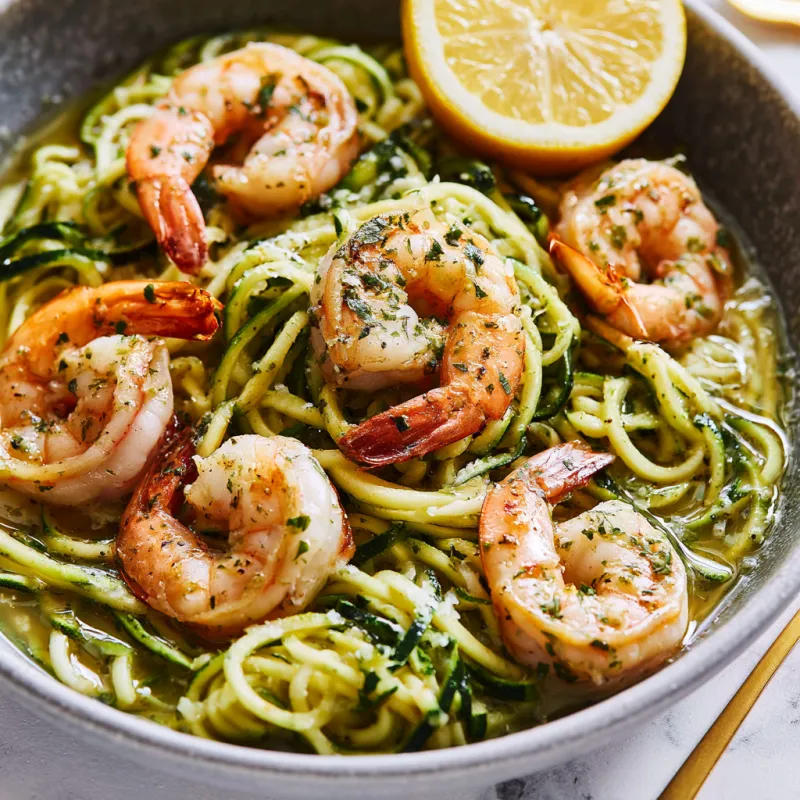
Lemon Garlic Shrimp Zoodles
Ingredients
Equipment
Method
- Spiralize the zucchini into noodles. Place in a colander, toss with 1 tablespoon kosher salt, and let sit for 10 minutes. This draws out excess moisture.
- While the zucchini sits, pat the shrimp dry with paper towels. Season with a pinch of salt and pepper.
- After 10 minutes, press the zucchini noodles gently with paper towels to remove released liquid. Set aside.
- Heat a large skillet over medium-high heat. Add 1 tablespoon butter. Once sizzling, add shrimp in a single layer. Cook 1 minute per side until pink and opaque. Transfer shrimp to a plate.
- Reduce heat to medium. Add remaining 1 tablespoon butter, garlic slices, and red pepper flakes. Cook 30 seconds until fragrant, scraping up any browned bits.
- Add the zucchini noodles to the skillet. Toss gently with tongs for 1-2 minutes until just warmed through and slightly tender but still al dente. Do not overcook—zoodles release water quickly and get soggy.
- Return shrimp to the pan. Add lemon zest, lemon juice, and parsley. Toss everything together for 30 seconds.
- Remove from heat. Taste and adjust salt and pepper. Serve immediately in warm bowls.