
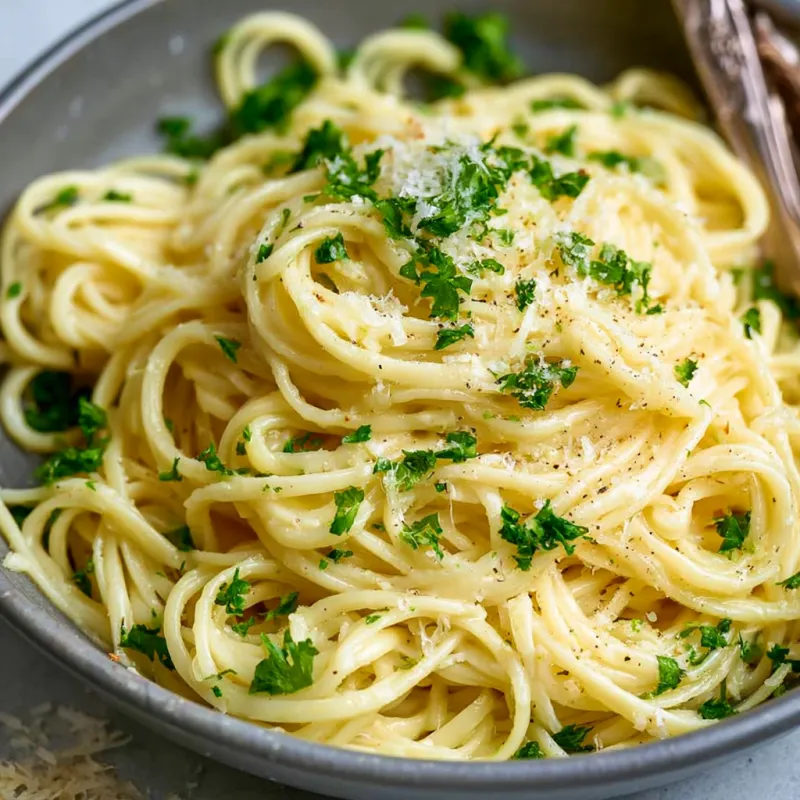
The smell of garlic hitting warm butter is a shortcut to dinner peace. This garlic butter parmesan pasta comes together in the time it takes to boil water — 9 minutes from start to finish. No cream, no complicated steps, no pile of dishes. Just glossy, cheese-coated strands with a sauce that actually sticks.

I’ve made versions of this for years, and the technique matters more than the ingredients. The secret is the ratio: 4 tablespoons butter to 1 cup finely grated Parmesan, with enough starchy pasta water to pull it all into a creamy emulsion. Get that right, and you have a sauce that wraps around every piece of pasta like a second skin.
The Right Tools for the Job
You need a large skillet or sauté pan — 12 inches wide works best. A smaller pan crowds the pasta and makes the sauce clump. You also need a microplane or the fine side of a box grater. Pre-shredded Parmesan will not melt properly; the anti-caking agents prevent it from dissolving. Grate your own from a block. It takes 60 seconds and changes the texture completely.
Ingredient Notes
Pasta Shape
Long strands work best here — spaghetti, linguine, or bucatini. The sauce clings to the length of the noodle. Short shapes like penne or rotini work too, but you’ll need a bit more pasta water to coat every nook.
Butter
Use unsalted butter so you control the salt level. Salted butter can make the final dish taste overly salty once you add the Parmesan, which is already salty. If you only have salted, reduce the added salt to 1/4 teaspoon.
Garlic
Four cloves sounds like a lot, but they mellow in the butter. Mince them finely or slice them thin — both work. Sliced garlic gives you occasional mild bites; minced garlic distributes more evenly. Cook it just until fragrant, about 45 seconds. Burnt garlic turns bitter.
Parmesan
Buy a wedge of real Parmigiano-Reggiano or Grana Padano. These have a crystalline texture that melts smoothly. Avoid the green can. Grate it as finely as you can — the finer the grate, the faster it dissolves into the sauce.
The Technique: Why This Works
The magic here is an emulsion. Butter is fat, Parmesan is protein and fat, pasta water is starch and water. When you combine them off the heat, the starch from the water acts as a bridge between the fat and the water, creating a smooth, creamy sauce. Heat breaks this bridge. That’s why you remove the pan from the heat before adding the cheese.
I add the Parmesan in three batches, tossing between each. This gives the cheese time to melt evenly without clumping. After each batch, I add a splash of pasta water — about 1/4 cup at a time. The total amount of water you’ll use varies depending on your pasta and how dry it is. Start with 1/2 cup and add more as needed. The sauce should look loose and glossy when you finish tossing; it will continue to thicken as it sits on the pasta.
Step-by-Step: The 9-Minute Method
Minute 0-8: Bring a large pot of water to a rolling boil. Add salt — 1 tablespoon for 4 quarts of water. Add your pasta and cook it 2 minutes less than the package directions for al dente. For standard dried spaghetti (9-10 minutes), that means you’ll cook it for 7-8 minutes.
Minute 6: While the pasta cooks, set your skillet over medium-low heat. Add the butter. Let it melt slowly — you want it just melted, not sizzling or browning. Add the garlic and cook for 45-60 seconds, stirring constantly. The garlic should soften and release its aroma but not take on color. If it starts to brown, your heat is too high.
Minute 8: Scoop out 2 cups of pasta water. Drain the pasta — do not rinse it. Add the pasta directly to the skillet with the garlic butter. Toss to coat every strand.
Minute 8:15: Remove the skillet from the heat. Add the Parmesan in three additions, tossing vigorously after each. Between additions, splash in about 1/4 cup of pasta water. Toss until the sauce looks creamy and coats the pasta. You may not need all the water. The sauce should be fluid but not watery — it should cling to the pasta when you lift a strand.
Minute 9: Season with salt, black pepper, and red pepper flakes if you like heat. Toss once more. Serve immediately in warm bowls. Top with extra Parmesan and a crack of black pepper.
Common Mistake: The Greasy Sauce
If your sauce looks greasy — pools of butter separate from the cheese — you either added the cheese over heat or didn’t use enough pasta water. The starch in the water is what holds everything together. Next time, remove the pan from the heat sooner and add water more generously. You can rescue a greasy sauce by drizzling in a tablespoon of cold water and tossing vigorously. It won’t be perfect, but it will improve.
Variations to Try
Once you have the base technique down, you can build on it. Add a handful of baby spinach just after the garlic softens — it wilts in 30 seconds. Stir in cooked chicken or shrimp at the end. For a lemony version, add the zest of one lemon with the cheese and a squeeze of juice just before serving.
If you want more vegetables, sauté sliced mushrooms in the butter before adding the garlic. Or stir in a cup of frozen peas with the pasta water — they’ll warm through in the residual heat.
For a dairy-free version, use a high-quality vegan butter and a soy-based parmesan alternative. The sauce will be thinner, but the flavor will still be good. If you need this to be gluten-free, use your favorite gluten-free pasta and cook it according to the package directions, still undercooking by 2 minutes.
Takeaway
Garlic butter parmesan pasta is a weeknight staple because it’s fast, forgiving, and deeply satisfying. Get the ratio right — 4 tablespoons butter to 1 cup cheese — and the technique of adding cheese off heat with enough pasta water, and you’ll have a creamy, non-greasy sauce every time. It’s the kind of dinner that feels like more than the sum of its parts. And really, it is.
Frequently Asked Questions
Why does my garlic butter parmesan pasta sauce turn out greasy or clumpy?
Two common mistakes: using heat that’s too high when adding the cheese, and not using enough pasta water. Always remove the pan from the heat before adding Parmesan. The cheese needs the starch from the water to emulsify — add it gradually with splashes of water and toss vigorously. If the sauce clumps, it means the heat broke it. Drizzle in a tablespoon of cold water and toss to bring it back.
Can I use pre-shredded Parmesan from a bag?
I strongly recommend grating a block of Parmesan yourself. Pre-shredded cheese contains anti-caking agents (like cellulose) that prevent it from melting smoothly. For this sauce, you need the cheese to dissolve into the butter and water. Freshly grated Parm melts into a silky emulsion. Pre-shredded will leave you with a grainy, clumpy sauce.
How do I keep the pasta from getting mushy if I’m not serving it right away?
Cook the pasta 2 minutes less than al dente. When you toss it in the skillet with the sauce, it will finish cooking in the residual heat and pasta water. If you need to hold it, stop after step 6 but before adding the final salt and pepper. Cover the pan loosely and set aside. Just before serving, reheat gently over low heat, add a splash of water, and finish with salt and pepper.
Can I add protein or vegetables to this pasta?
Absolutely. For a complete meal, add cooked chicken, shrimp, or sautéed mushrooms. If adding vegetables like spinach or peas, add them to the skillet after the garlic softens (step 3) and cook 1-2 minutes before adding the pasta. For chicken or shrimp, cook them first in the same skillet, remove, and then proceed with the butter and garlic. Return the protein at the end with the cheese.
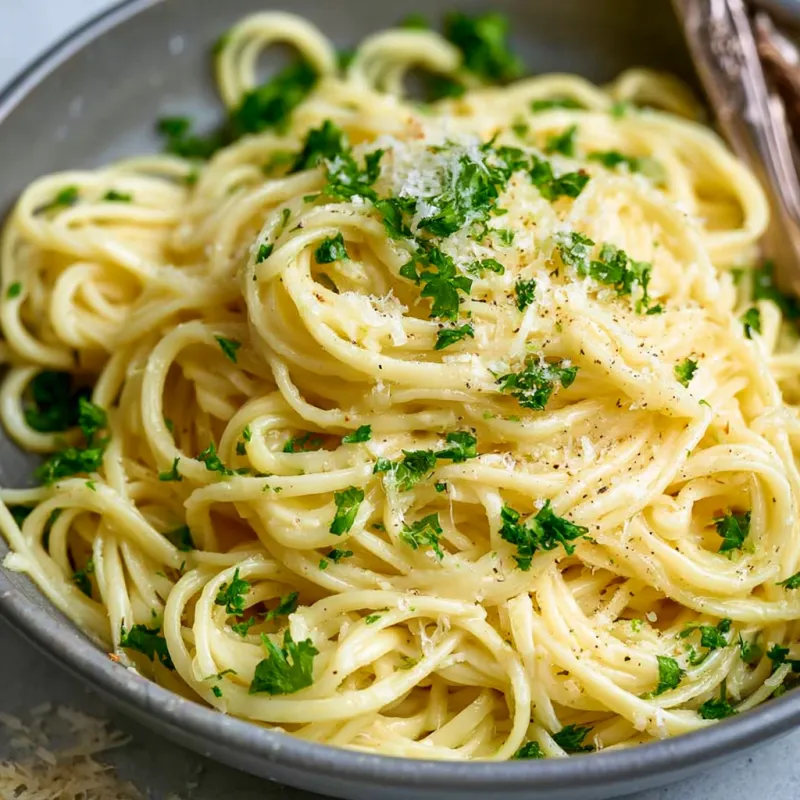
Garlic Butter Parmesan Pasta
Ingredients
Equipment
Method
- Bring a large pot of water to a rolling boil. Add 1 tablespoon kosher salt (about 1 1/2 teaspoons per quart). Add the pasta and cook 2 minutes less than the package directions for al dente. 2. While the pasta cooks, set a large skillet over medium-low heat. Add the butter and let it melt slowly — you want it just melted, not bubbling or browning. 3. Add the garlic to the butter. Cook for 45-60 seconds, stirring constantly, until fragrant and just softened. Do not let it brown. 4. Using a liquid measuring cup, scoop out 2 cups of the starchy pasta water. Reserve. 5. Drain the pasta (do not rinse) and add it directly to the skillet with the garlic butter. Toss well to coat. 6. Remove the skillet from the heat. Add the Parmesan cheese in three additions, tossing vigorously after each. Between additions, add a splash of pasta water (about 1/4 cup total per addition) and toss until the sauce looks creamy and coats the pasta. You may not need all the water. 7. Add the salt, black pepper, and red pepper flakes (if using). Toss again. The sauce should look silky and cling to the pasta — if it looks dry, add another tablespoon of pasta water. 8. Serve immediately in warm bowls, topped with extra Parmesan and a crack of black pepper.