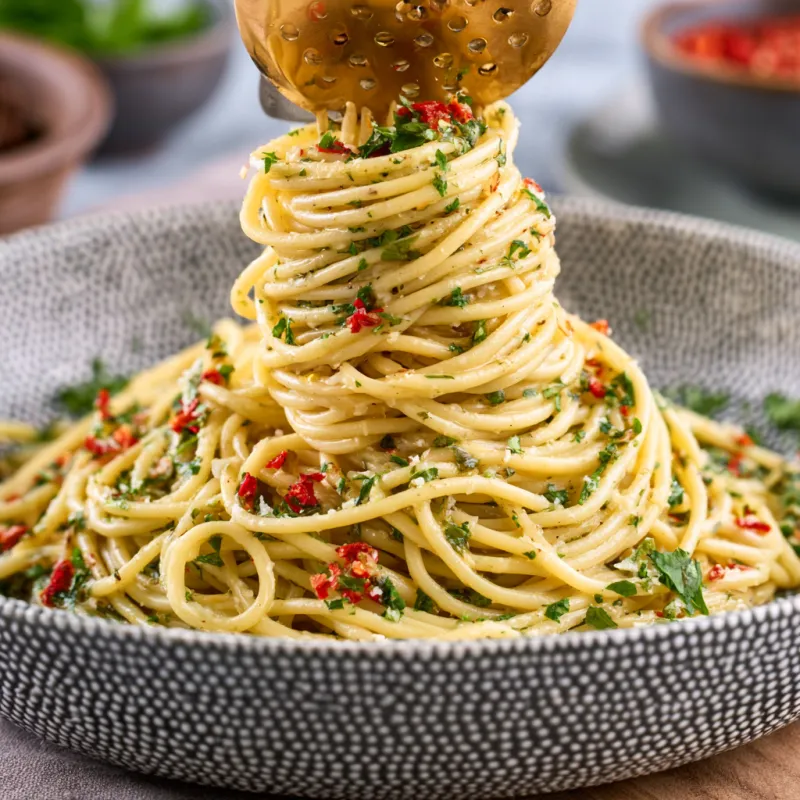
Ingredients
Equipment
Method
- Bring a large pot of generously salted water (about 1 tablespoon salt per 4 quarts water) to a rolling boil. Add the spaghetti and cook until 1-2 minutes shy of al dente (about 7-8 minutes for most brands). Reserve 1 cup of pasta water before draining. Drain the pasta (do not rinse).
- While the pasta cooks, set a 12-inch skillet over medium heat. Add the olive oil and the sliced garlic. Cook gently, stirring often, until the garlic is fragrant and just starting to turn golden at the edges — about 2-3 minutes. Do not let it brown or burn; if it starts browning too fast, lower the heat.
- Immediately add the red pepper flakes to the oil and swirl for 10 seconds to infuse.
- Add the drained pasta directly to the skillet. Toss with tongs to coat in the oil. Add 1/2 cup of the reserved pasta water and increase heat to medium-high. Cook, tossing constantly, for 1-2 minutes until the liquid emulsifies into a silky, slightly thickened sauce that clings to the pasta. If it looks dry, add more pasta water a tablespoon at a time.
- Remove from heat. Add the parsley and toss again. Taste and add salt if needed (the pasta water and cheese will add salt, so go easy). Serve immediately in warm bowls.
Notes
Storage: This pasta is best eaten fresh, as it doesn't reheat well (the sauce can separate). If you have leftovers, store in an airtight container in the fridge for up to 2 days and reheat gently in a skillet with a splash of water. Allergens: Gluten (pasta). For gluten-free, use gluten-free spaghetti and cook per package directions. For dairy-free, this recipe is naturally dairy-free. The oil can splatter when adding pasta water, so add it carefully and stand back slightly. Common mistake: Overcooking the garlic — it should be pale gold, not brown, or it becomes bitter.