
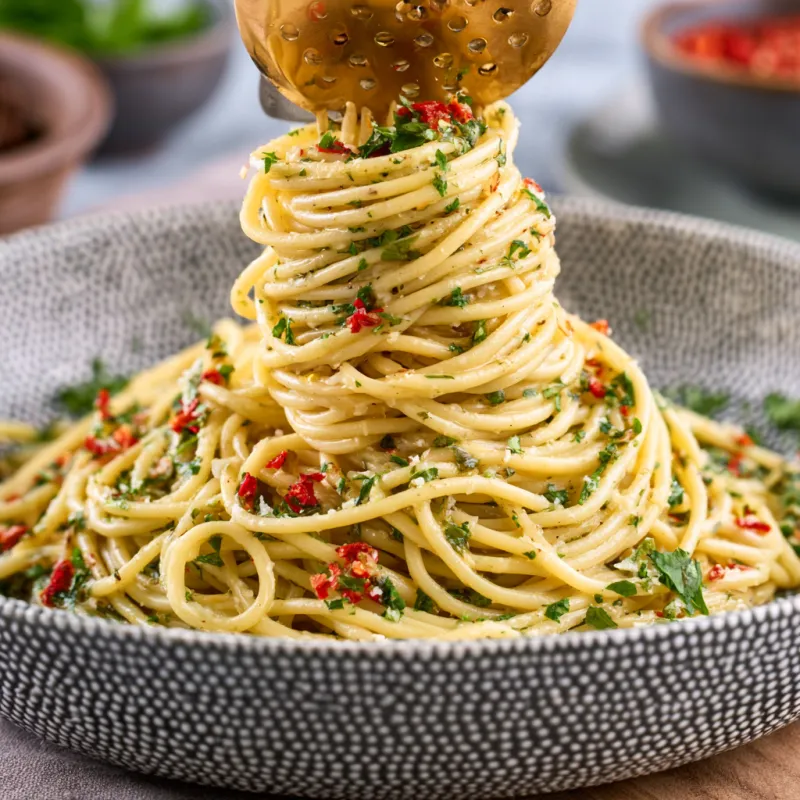
I keep the ratio at one-third cup of olive oil for every eight ounces of pasta. That might sound like a lot, but trust me — this isn’t a dish where you can skimp. The oil is the sauce, the flavor, the whole point. Get that ratio right, and you’re already most of the way to a perfect spaghetti aglio e olio.

This is the weeknight pasta I make when the fridge is almost empty and I need dinner in twenty minutes. Garlic, olive oil, chili, parsley, and pasta water — that’s it. But the technique matters. Burn the garlic and you get bitterness. Skip the emulsification step and you get a greasy mess. Here’s how to avoid both.
Why the Ratio Matters
Most recipes call for a vague “glug” of oil. That’s not helpful. I use exactly 1/3 cup (80ml) of extra-virgin olive oil for 8 ounces of dry spaghetti. This gives enough fat to coat every strand without leaving a pool of oil in the bottom of the bowl. For a single serving (4 ounces of pasta), use 2 1/2 tablespoons. For a family-sized batch (1 pound), use 2/3 cup.
Why extra-virgin? The oil is the star here. You want one with a fruity, peppery flavor, not a bland, neutral one. Save the cheap stuff for roasting vegetables.
The Garlic: Thin, Even Slices
Slice the garlic cloves crosswise into thin, even rounds — about 1/16-inch thick. Slicing, not mincing, is key. Mincing releases too much moisture and makes the garlic burn faster. Thin slices toast evenly and give a gentle, sweet garlic flavor.
Here’s the mistake I see most often: adding the garlic to screaming-hot oil. It browns in seconds and turns bitter. Instead, start with cold oil in a cold pan, add the garlic, then turn the heat to medium. As the oil warms, the garlic infuses gently. Stir often. The goal is pale gold at the edges — no darker. This takes about 2-3 minutes. If it starts browning too fast, pull the pan off the heat for a few seconds.
The Emulsification Trick
This is where the dish goes from oily to silky. After you add the drained pasta to the garlic oil, pour in 1/2 cup of the reserved pasta water. The starch in that water is the magic ingredient. Turn the heat to medium-high and toss the pasta constantly with tongs for 1-2 minutes. You’ll see the liquid change from watery to creamy, coating the pasta like a light sauce. If it looks dry, add more pasta water a tablespoon at a time.
Why does this work? The starch molecules in the pasta water bind with the oil to form an emulsion — a stable mixture that won’t separate. Without this step, the oil just sits on the pasta, making it feel greasy. With it, each strand is glossy and light.
Doneness and Visual Cues
Cook the pasta 1-2 minutes shy of al dente (check the package time and set a timer for 2 minutes less). It will finish cooking in the pan with the sauce. The pasta should be firm to the bite but not crunchy in the center.
When you toss the pasta with the water and oil, look for these cues:
- The liquid in the pan starts to look slightly thickened and opaque, not clear and watery.
- The pasta strands move easily but aren’t swimming in liquid.
- A thin film of emulsified sauce clings to the pasta when you lift it with tongs.
If you see separate pools of oil, you need to toss more or add a splash more water.
Finishing Touches
Fresh parsley is non-negotiable here. Dried parsley has no flavor. Chop it finely and toss it in off the heat so it stays bright green. Red pepper flakes add warmth, not just heat — use 1/2 teaspoon for a gentle tingle, or more if you like it spicy. Add them just after the garlic so they bloom in the oil for a few seconds.
Salt the pasta water generously — it should taste like the sea. That’s the only salt you need, since the pasta water carries it into the sauce. Taste before adding more salt at the end.
Common Mistakes to Avoid
- Burning the garlic: Low heat, patience, and constant stirring. Pale gold only.
- Skipping the pasta water: Without it, you get oily pasta, not saucy pasta.
- Rinsing the pasta: Never rinse. The surface starch helps the sauce cling.
- Using too little oil: 1/3 cup for 8 ounces of pasta is the minimum. Less means dry, clumpy pasta.
A Quick Note on Safety
When you add the pasta water to the hot oil, it will splatter. Add it carefully from a measuring cup, standing back slightly, and toss immediately to calm the sizzle. Always use dry hands near hot oil, and keep the skillet handle turned inward on the stove.
Takeaway
Spaghetti aglio e olio is proof that a handful of pantry ingredients can make a stunning dinner — if you respect the technique. The ratio of oil to pasta, the gentle toasting of the garlic, and the emulsification with pasta water are the three pillars. Get those right, and you’ll have a glossy, garlicky, perfectly sauced pasta in under 20 minutes. No cream, no butter, no cheese needed. Just good olive oil and a little patience.
Frequently Asked Questions
What is the best pasta shape for aglio e olio?
Spaghetti is traditional, but any long pasta like linguine or bucatini works well. The key is a shape that holds the sauce. Avoid short shapes like penne, as they don’t coat as evenly.
Can I use pre-minced garlic from a jar?
I don’t recommend it. Fresh garlic sliced thinly gives a milder, sweeter flavor and a better texture. Jarred minced garlic can be harsh and won’t infuse the oil as evenly.
Why does my aglio e olio turn out greasy?
The sauce likely didn’t emulsify. The trick is to add pasta water (which contains starch) and toss vigorously over medium-high heat. The starch binds the oil and water into a creamy, clingy sauce instead of a separate oily layer.
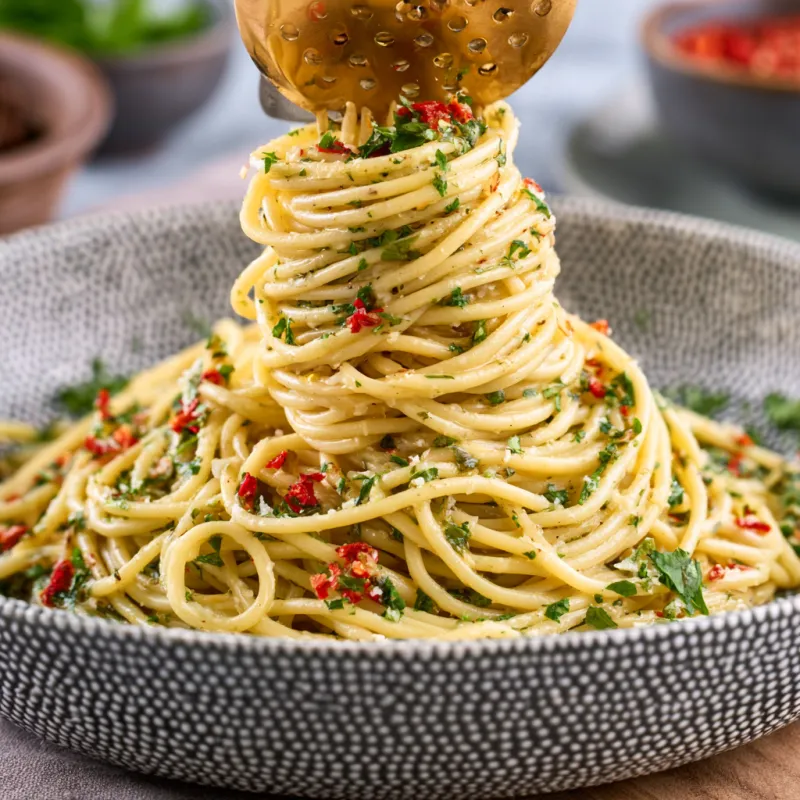
Spaghetti Aglio e Olio
Ingredients
Equipment
Method
- Bring a large pot of generously salted water (about 1 tablespoon salt per 4 quarts water) to a rolling boil. Add the spaghetti and cook until 1-2 minutes shy of al dente (about 7-8 minutes for most brands). Reserve 1 cup of pasta water before draining. Drain the pasta (do not rinse).
- While the pasta cooks, set a 12-inch skillet over medium heat. Add the olive oil and the sliced garlic. Cook gently, stirring often, until the garlic is fragrant and just starting to turn golden at the edges — about 2-3 minutes. Do not let it brown or burn; if it starts browning too fast, lower the heat.
- Immediately add the red pepper flakes to the oil and swirl for 10 seconds to infuse.
- Add the drained pasta directly to the skillet. Toss with tongs to coat in the oil. Add 1/2 cup of the reserved pasta water and increase heat to medium-high. Cook, tossing constantly, for 1-2 minutes until the liquid emulsifies into a silky, slightly thickened sauce that clings to the pasta. If it looks dry, add more pasta water a tablespoon at a time.
- Remove from heat. Add the parsley and toss again. Taste and add salt if needed (the pasta water and cheese will add salt, so go easy). Serve immediately in warm bowls.