Ingredients
Equipment
Method
- Preheat the oven to 350°F (175°C). Grease two 8-inch round cake pans and line the bottoms with parchment paper.
- In a large bowl, whisk together the flour, sugar, baking powder, and salt.
- Add the softened butter to the dry ingredients. Beat on low speed until the mixture resembles coarse sand, about 30 seconds.
- In a separate bowl, whisk together the eggs, milk, and vanilla.
- Add the wet ingredients to the dry mixture in two additions, mixing on low after each until just combined. Scrape the bowl well. The batter will be thick and slightly lumpy.
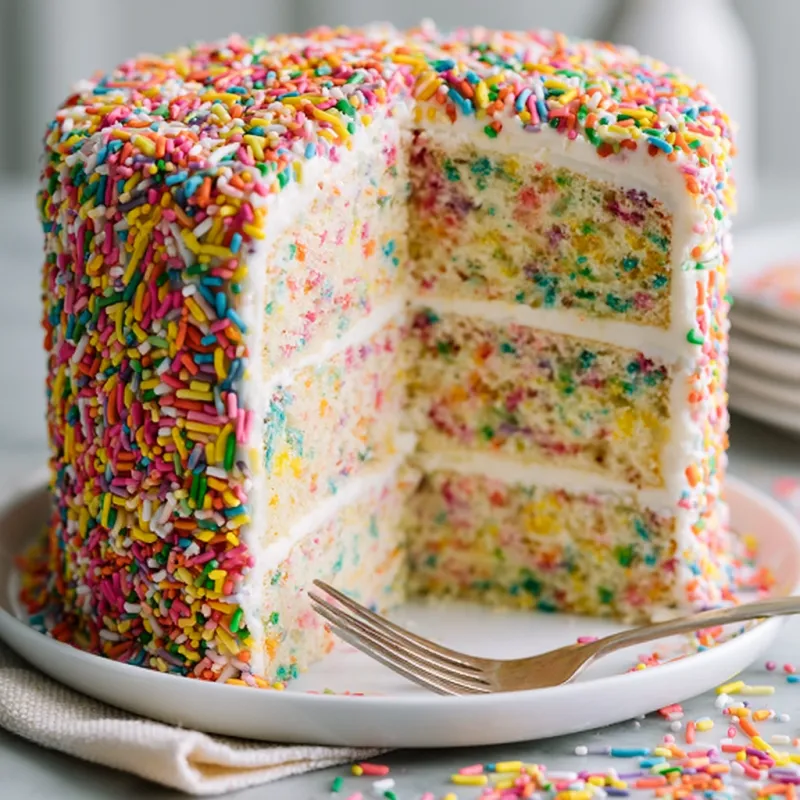
- Fold in the sprinkles gently with a rubber spatula. Do not overmix—just until evenly distributed. Overmixing can cause the sprinkles to bleed their color.
- Divide the batter evenly between the prepared pans. Smooth the tops.
- Bake for 22-25 minutes, until a toothpick inserted in the center comes out clean or with a few moist crumbs. The edges should pull away slightly from the pan.
- Cool in the pans for 10 minutes, then turn out onto a wire rack to cool completely before frosting.
- For the frosting: Beat the butter on medium speed until creamy, about 2 minutes.
- Gradually add the powdered sugar, one cup at a time, beating on low after each addition.
- Add the heavy cream, vanilla, and salt. Beat on medium-high for 3 minutes until light and fluffy. If the frosting is too stiff, add milk 1 tablespoon at a time until spreadable.
- Place one cake layer on a serving plate. Spread about 3/4 cup of frosting evenly on top. Place the second layer on top. Crumb-coat the entire cake with a thin layer of frosting, then refrigerate for 15 minutes.
- Apply the final layer of frosting. Decorate with extra sprinkles on the sides or top, if desired.
Notes
Storage: Store the cake in an airtight container at room temperature for up to 2 days, or refrigerate for up to 5 days. Let come to room temperature before serving. Freeze unfrosted cake layers, wrapped tightly in plastic and foil, for up to 3 months. Common allergens: This cake contains dairy, eggs, and gluten. For a dairy-free version, substitute the butter with a plant-based butter and use oat milk. For a gluten-free version, use a 1:1 gluten-free baking flour blend. Always consult a qualified professional for specific dietary needs.