
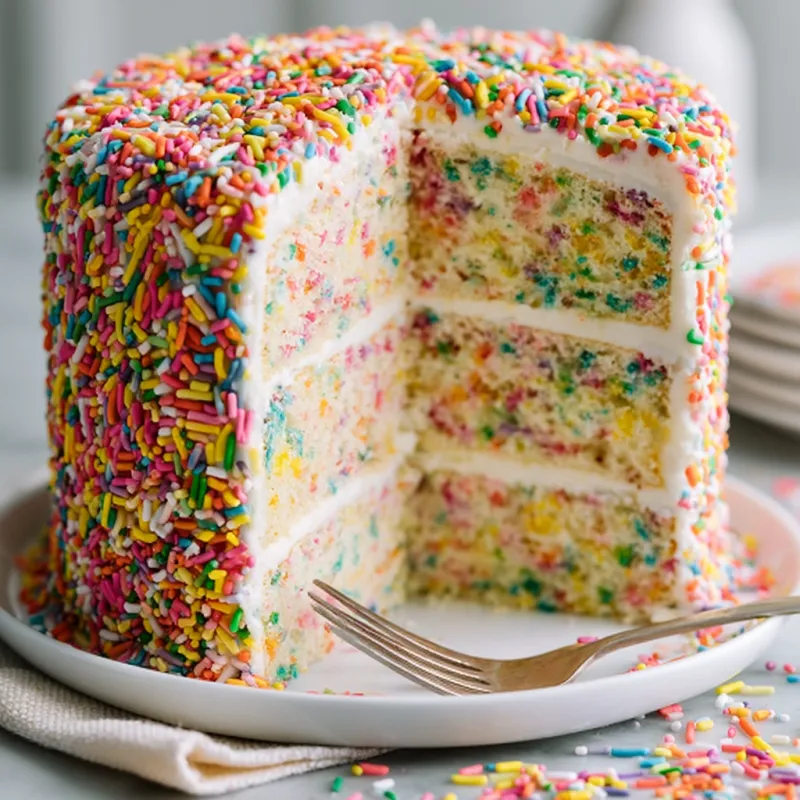
There’s something about a slice of rainbow sprinkle cake that signals a celebration. The first time I made one, I was frustrated by how the sprinkles turned the batter a muddy gray. The cake was dense, and the frosting slid off in patches. It took me a dozen tries to figure out the exact ratio that keeps the crumb tender and the sprinkles vibrant. This recipe is the result.

The key is a 1:1.1 ratio of sugar to flour by weight. That extra tenth part of sugar tenderizes the gluten just enough without making the cake cloying. And the sprinkles? You need jimmies—the long, rod-shaped ones. Nonpareils bleed color like a broken highlighter. Fold them in last, with a light hand, and they stay bright.
The Right Ratio for a Tender Crumb
I use 270 grams of all-purpose flour to 300 grams of granulated sugar. This ratio gives structure without toughness. The butter must be at room temperature—around 65°F to 68°F. If it’s too cold, it won’t cream properly. Too warm, and the batter turns greasy. I always beat the butter into the dry ingredients first, a technique called the reverse creaming method. It coats the flour in fat, which limits gluten development. The result is a cake that’s soft and fine-crumbed, not rubbery.
When you add the wet ingredients, do it in two additions. Mix on low, just until the flour disappears. A few small lumps are fine. Overmixing at this stage activates gluten, making the cake tough. The batter will be thick—almost like a soft dough. That’s correct.
Why Jimmies Work Better
I tested this with four types of sprinkles. Nonpareils—those tiny balls—dissolved into streaks of color. Sanding sugar melted completely. Confetti quins left white spots where the coating cracked. Only jimmies held their shape and color through baking. They’re coated in a thin, waxy shell that resists moisture. Fold them in gently, with no more than ten strokes of the spatula. If you see streaks of color in the batter, you’ve overmixed.
Baking for Even Layers
Preheat the oven to 350°F (175°C). I always line my pans with parchment rounds; it guarantees clean release. Fill each pan with exactly 450 grams of batter for even layers. Bake on the middle rack, and don’t open the door for the first 20 minutes. The cake is done when a toothpick inserted in the center comes out with a few moist crumbs, not wet batter. The edges will be golden and pulling away from the pan. Cool in the pans for exactly 10 minutes—any longer, and the bottom steams and becomes soggy. Then turn them out onto a rack to cool completely.
Stable Buttercream That Stays Put
The frosting is a classic American buttercream, but I add a pinch of salt to balance the sweetness. The butter must be soft—leave it out for an hour, but no longer. Beat it alone for two minutes until it’s pale and fluffy. Then add the powdered sugar one cup at a time; this prevents a cloud of sugar from flying everywhere. The heavy cream adds richness, but if you need a stiffer frosting for piping, use milk instead. Beat on medium-high for three minutes. The frosting should be smooth and hold a peak. If it looks curdled, the butter was too cold. Fix it by warming the bowl with your hands for a few seconds, then beat again.
Assembling Without Sliding
Level the cake layers with a serrated knife if they domed. Place the first layer on a cake board or plate. Spread about 3/4 cup of frosting evenly. Set the second layer on top, cut-side down. Apply a thin crumb coat—just enough to seal in the crumbs. Refrigerate for 15 minutes. This sets the frosting and prevents crumbs from mixing into the final layer. Then apply the final coat. For a smooth finish, use an offset spatula dipped in hot water and wiped dry. Press extra sprinkles onto the sides while the frosting is still soft.
A final note on safety: When using an electric mixer, keep the beaters submerged to avoid splashing. Hot pans require oven mitts, and a serrated knife is sharp—cut away from your body. Store the cake at room temperature if serving within two days, or refrigerate for longer. Bring slices to room temperature before eating for the best texture.
This cake is straightforward but precise. Stick with the ratio, use jimmies, and fold gently. You’ll get a bright, tender cake that tastes as good as it looks.
Frequently Asked Questions
Why did my sprinkles bleed into the batter?
Sprinkles bleed when you overmix the batter or use nonpareils (the tiny round beads). Jimmies—the long, rod-shaped sprinkles—hold their color better. Fold them in gently at the very end, and only until just combined.
Can I use a different pan size?
Yes, but adjust the baking time. For a 9-inch round pan, the cake will be thinner and bake in 18-22 minutes. For a 9×13 inch sheet pan, bake for 25-30 minutes. Always test with a toothpick.
How do I keep the cake layers flat?
Use room-temperature ingredients and don’t overfill the pans. If the layers dome, level them with a serrated knife after cooling. I also wrap the pans with damp baking strips for a flat top every time.
Can I make this cake ahead of time?
Absolutely. Bake the cake layers a day ahead, wrap them tightly in plastic wrap, and store at room temperature. Frost the cake the day you plan to serve it for the freshest texture.
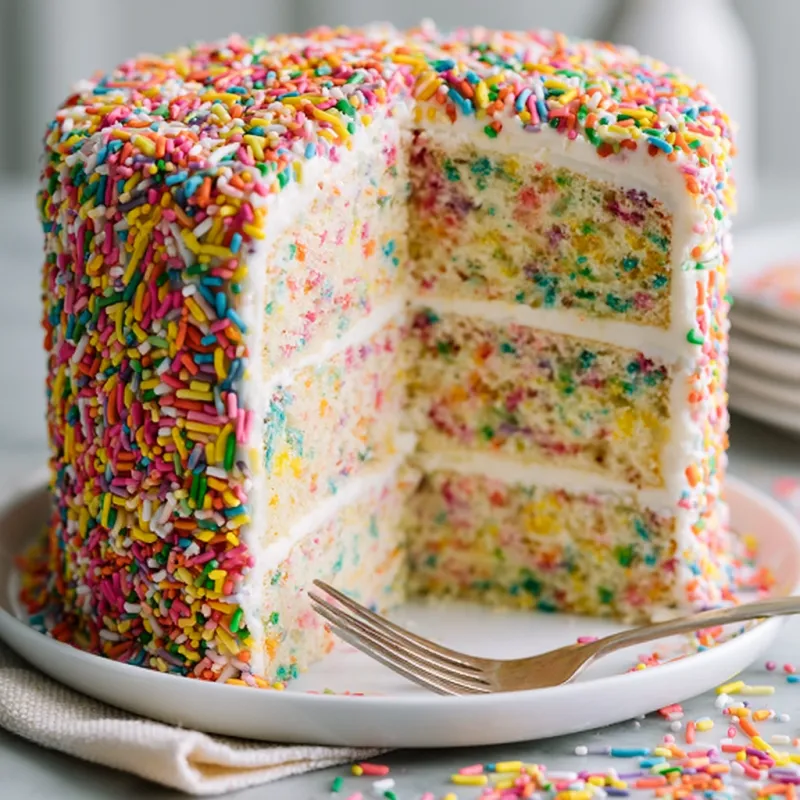
Rainbow Sprinkle Layer Cake
Ingredients
Equipment
Method
- Preheat the oven to 350°F (175°C). Grease two 8-inch round cake pans and line the bottoms with parchment paper.
- In a large bowl, whisk together the flour, sugar, baking powder, and salt.
- Add the softened butter to the dry ingredients. Beat on low speed until the mixture resembles coarse sand, about 30 seconds.
- In a separate bowl, whisk together the eggs, milk, and vanilla.
- Add the wet ingredients to the dry mixture in two additions, mixing on low after each until just combined. Scrape the bowl well. The batter will be thick and slightly lumpy.
- Fold in the sprinkles gently with a rubber spatula. Do not overmix—just until evenly distributed. Overmixing can cause the sprinkles to bleed their color.
- Divide the batter evenly between the prepared pans. Smooth the tops.
- Bake for 22-25 minutes, until a toothpick inserted in the center comes out clean or with a few moist crumbs. The edges should pull away slightly from the pan.
- Cool in the pans for 10 minutes, then turn out onto a wire rack to cool completely before frosting.
- For the frosting: Beat the butter on medium speed until creamy, about 2 minutes.
- Gradually add the powdered sugar, one cup at a time, beating on low after each addition.
- Add the heavy cream, vanilla, and salt. Beat on medium-high for 3 minutes until light and fluffy. If the frosting is too stiff, add milk 1 tablespoon at a time until spreadable.
- Place one cake layer on a serving plate. Spread about 3/4 cup of frosting evenly on top. Place the second layer on top. Crumb-coat the entire cake with a thin layer of frosting, then refrigerate for 15 minutes.
- Apply the final layer of frosting. Decorate with extra sprinkles on the sides or top, if desired.