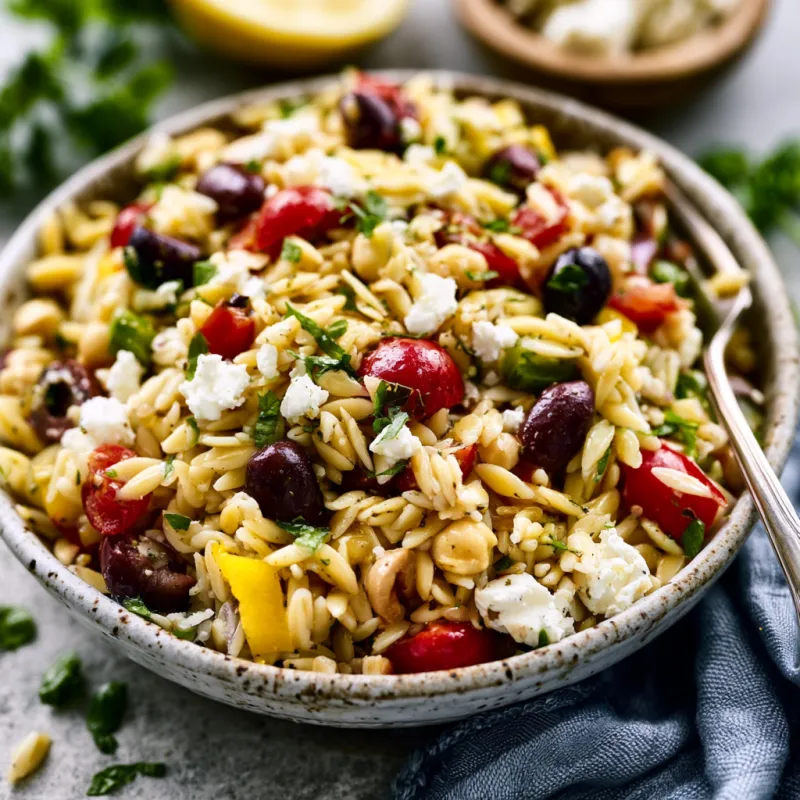
Ingredients
Equipment
Method
- Bring a large pot of salted water to a rolling boil (about 4 quarts water with 1 tablespoon salt). Add the orzo and cook according to package directions until al dente — usually 8-9 minutes. Taste a piece: it should be tender but still have a slight firmness at the center. Drain in a colander and rinse under cold running water for 30 seconds to stop the cooking. Shake well to remove excess water, then spread on a baking sheet to cool completely (about 10 minutes). This prevents clumping and keeps the texture light.
- While the orzo cools, make the dressing. In a small bowl, whisk together the olive oil, lemon juice, Dijon mustard, minced garlic, dried oregano, salt, and pepper. Taste and adjust — you want a bright, tangy balance with the olive oil mellowing the lemon. Set aside.
- In a large mixing bowl, combine the cooled orzo, cucumber, cherry tomatoes, olives, red onion, feta, parsley, and mint. Drizzle the dressing over the top and toss gently with a rubber spatula until everything is evenly coated. The feta will soften slightly, which is fine — it adds creaminess.
- Taste and add salt and pepper as needed. Keep in mind that feta and olives are already salty, so go easy. Cover and refrigerate for at least 30 minutes before serving to let the flavors meld. The salad is best served chilled or at room temperature.
Notes
Storage: Keep in an airtight container in the refrigerator for up to 3 days. The orzo will absorb some dressing over time, so you may want to refresh with a squeeze of lemon and a drizzle of olive oil before serving. For a gluten-free version, substitute orzo with gluten-free pasta (cook it 1-2 minutes less than the package says to keep it from getting mushy). To make it vegan, omit the feta — the olives and dressing still give plenty of flavor. Common allergens: gluten (orzo), dairy (feta). Handle the knife carefully when slicing vegetables.