
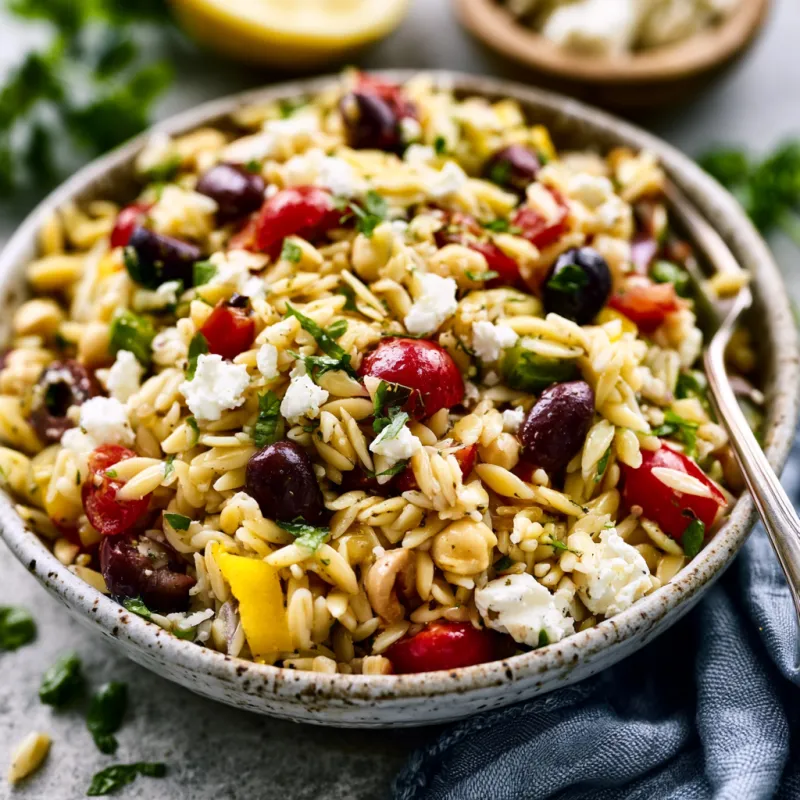
The first time I made this salad, I was struck by how the cool crunch of cucumber and the briny pop of Kalamata olives played against the tender, lemony orzo. It’s a side dish that feels both substantial and refreshing — perfect for a summer barbecue or a weekday lunch that needs a little color. The key is in the details: cooking the orzo just right and letting the dressing coat every grain without drowning it.

Choosing the Right Orzo
Orzo is a small, rice-shaped pasta. It cooks quickly and absorbs flavors beautifully, but it can turn sticky if you’re not careful. Look for a brand that holds its shape after cooking — I find that bronze-die-cut orzo has a rougher surface that grabs the dressing better. Avoid overcooking at all costs. Set a timer and check the pasta a full minute before the package suggests. You want it al dente: tender but with a tiny white dot at the center when you bite into a piece.
The Dressing: Balance Is Everything
A great Greek dressing is bright, herbaceous, and not too oily. I keep the ratio at 3 parts olive oil to 2 parts lemon juice — that’s 1/4 cup oil to 3 tablespoons juice for this amount of pasta. The Dijon mustard acts as an emulsifier, helping the dressing cling to the orzo rather than pool at the bottom of the bowl. Whisk it in thoroughly, then add the dried oregano. Let the dressing sit while you prep the vegetables — those few minutes allow the garlic and oregano to bloom in the acid.
Vegetable Prep: Size Matters
Dice the cucumber into pieces about the same size as the orzo — that way every forkful has a bit of everything. English cucumbers are ideal because they have fewer seeds and a thinner skin, so you don’t need to peel them. For the cherry tomatoes, halve them crosswise (not stem to tip) to keep the juices inside. Slice the red onion paper-thin; a mandoline makes this easy, but a sharp knife works fine. Soak the sliced onion in cold water for 5 minutes if you want to mellow its bite — just drain and pat dry before adding.
Assembling the Salad
Once the orzo is cool and dry, transfer it to a large bowl. Add the cucumber, tomatoes, olives, onion, feta, parsley, and mint. Pour the dressing over the top and toss gently with a rubber spatula. Don’t overmix — you want the feta to stay in small crumbles, not turn into paste. Taste and adjust seasoning. Because feta and olives are already salty, I rarely add extra salt. A few grinds of black pepper, though, always helps.
Let It Rest
This salad improves after 30 minutes in the fridge. The orzo absorbs some of the dressing, and the flavors settle into something harmonious. If you’re serving it later, cover the bowl tightly. When you’re ready to eat, give it a stir. If the pasta has soaked up too much dressing, add a splash of lemon juice and a drizzle of olive oil to revive it.
Common Mistake to Avoid
Don’t dress the orzo while it’s still warm. Warm pasta absorbs dressing aggressively, turning the salad dry and heavy. Always cool the orzo completely — spread it on a baking sheet for 10 minutes after rinsing. Patience here pays off.
Make-Ahead Tips
This salad travels well, making it a great choice for potlucks. Pack it in a sealed container and keep it cool until serving. If you’re making it a day ahead, store the dressing separately and toss just before serving — the vegetables stay crunchier that way. Leftovers keep for up to 3 days in the fridge, but the texture is best within the first 24 hours.
Takeaway: A Greek orzo pasta salad that’s balanced, fresh, and dependable. Nail the orzo’s doneness, let the dressing emulsify, and give it time to rest — the rest is just good ingredients doing their thing.
Frequently Asked Questions
Can I make Greek orzo pasta salad ahead of time?
Yes, this salad is perfect for making ahead. Prepare it up to 24 hours in advance and store it covered in the refrigerator. The flavors deepen as it sits. Before serving, give it a good stir and add a splash of lemon juice or olive oil if it seems dry.
How do I keep the orzo from getting mushy in the salad?
Cook the orzo just until al dente — it should have a slight bite at the center. Rinse it immediately with cold water to stop the cooking, then spread it on a baking sheet to cool completely before adding the dressing and vegetables. This prevents the pasta from overcooking and absorbing too much dressing.
What can I substitute for feta cheese?
For a dairy-free option, omit the feta or use a plant-based feta-style crumble. If you just don’t like feta, try crumbled goat cheese for a tangy alternative, or small cubes of halloumi (grilled or pan-fried) for a heartier texture. Keep in mind that halloumi is salty, so adjust the salt in the dressing.
Can I add protein to make this a main dish?
Absolutely. Grilled chicken, shrimp, or chickpeas all work well. If adding chicken or shrimp, cook them separately, let cool, and toss in with the salad just before serving. For chickpeas, rinse and drain a can, then add them directly — no need to cook.
How long does this salad keep in the fridge?
Stored in an airtight container, Greek orzo pasta salad stays fresh for up to 3 days. After that, the vegetables may soften and the pasta can become too soft. If you plan on leftovers, consider keeping the dressing separate and adding it just before eating.
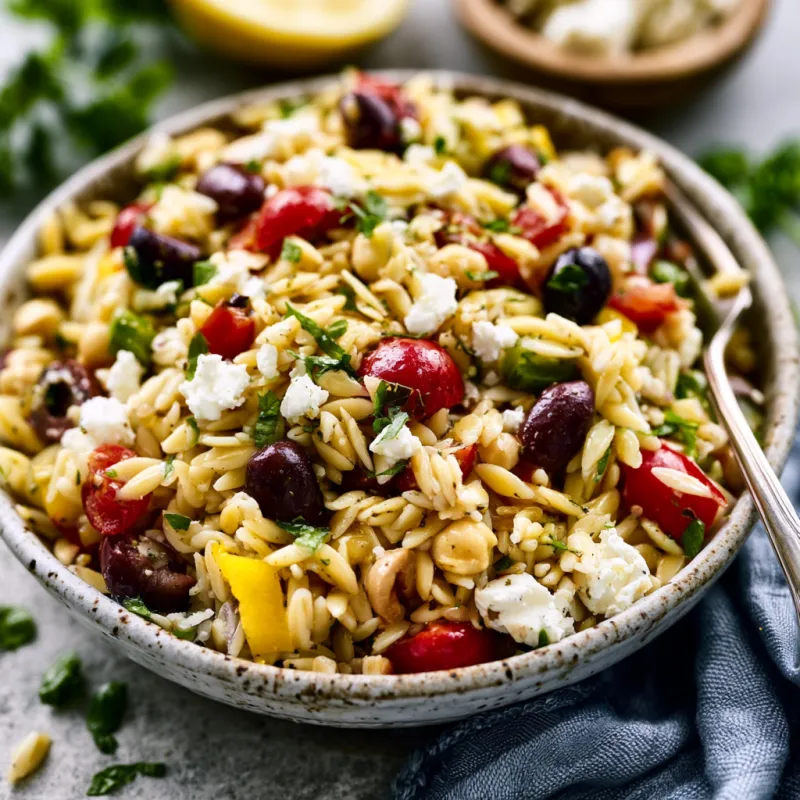
Greek Orzo Pasta Salad with Lemony Herb Dressing
Ingredients
Equipment
Method
- Bring a large pot of salted water to a rolling boil (about 4 quarts water with 1 tablespoon salt). Add the orzo and cook according to package directions until al dente — usually 8-9 minutes. Taste a piece: it should be tender but still have a slight firmness at the center. Drain in a colander and rinse under cold running water for 30 seconds to stop the cooking. Shake well to remove excess water, then spread on a baking sheet to cool completely (about 10 minutes). This prevents clumping and keeps the texture light.
- While the orzo cools, make the dressing. In a small bowl, whisk together the olive oil, lemon juice, Dijon mustard, minced garlic, dried oregano, salt, and pepper. Taste and adjust — you want a bright, tangy balance with the olive oil mellowing the lemon. Set aside.
- In a large mixing bowl, combine the cooled orzo, cucumber, cherry tomatoes, olives, red onion, feta, parsley, and mint. Drizzle the dressing over the top and toss gently with a rubber spatula until everything is evenly coated. The feta will soften slightly, which is fine — it adds creaminess.
- Taste and add salt and pepper as needed. Keep in mind that feta and olives are already salty, so go easy. Cover and refrigerate for at least 30 minutes before serving to let the flavors meld. The salad is best served chilled or at room temperature.