
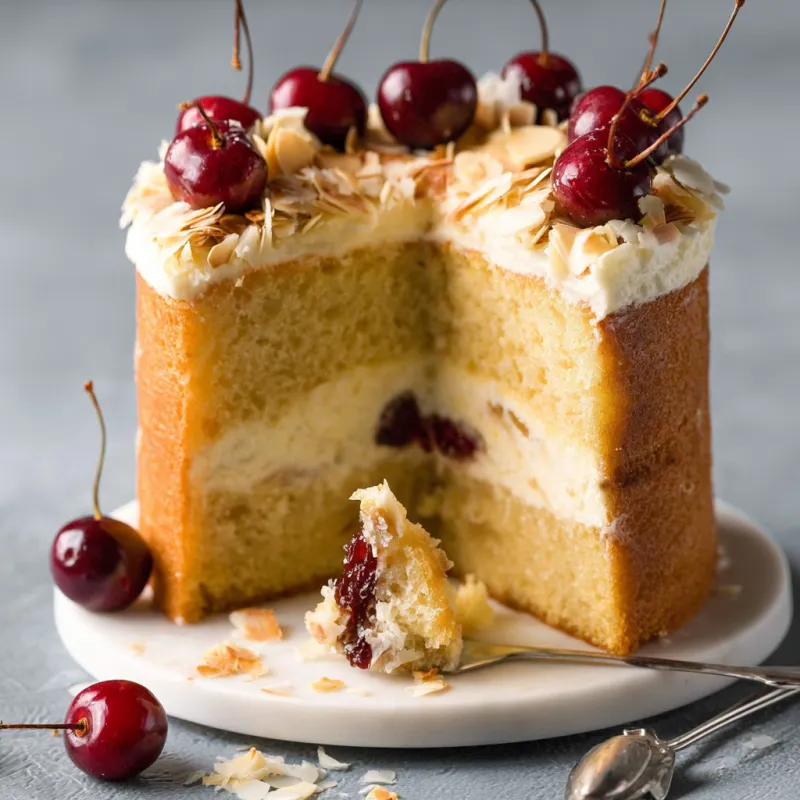
The aroma of vanilla cake baking is one of those simple pleasures that fills a kitchen with warmth. But too often, the promise of a tender crumb ends in a dry, dense disappointment. The problem isn’t the recipe—it’s the method. Most one-bowl cakes skip the creaming step, which means the fat and sugar don’t get a chance to aerate. Without that air, the cake can fall flat. This recipe solves that with a simple technique called emulsion: you whisk the wet ingredients directly into the dry, but you control the order and temperature so the batter stays light. The result is a cake that’s moist, fine-crumbed, and reliable enough to become your go-to.

The Right Ratio for a Tender Crumb
This recipe uses a specific ratio by weight: 190 grams of flour to 200 grams of sugar. That’s a little more sugar than flour, which keeps the cake moist without making it cloying. The yogurt adds acidity, which reacts with the baking soda to create lift, while the fat from butter and milk keeps the crumb soft. I keep the liquid-to-dry ratio at about 1:1.6 by weight—enough to make a thin batter that bakes up light. If you don’t have a kitchen scale, use the spoon-and-level method for flour: spoon it into the measuring cup, then level with a knife. Never scoop directly from the bag, or you’ll pack in too much flour and end up with a dry cake.
Why This One-Bowl Method Works
The key is the order of mixing and the temperature of the ingredients. Melt the butter first, then let it cool slightly so it’s warm but not hot—about 110°F (43°C). Hot butter can cook the eggs when they hit the bowl. The milk and yogurt should be at room temperature. When you pour the wet ingredients into the dry, the warm butter helps dissolve the sugar quickly, which creates a smooth batter without overmixing. The yogurt’s acidity tenderizes the gluten, so the cake stays soft even though you didn’t cream the butter and sugar. This is the same principle used in many bakery-style cakes, but done in one bowl with no extra equipment.
Common Mistake to Avoid
Don’t be tempted to beat the batter until it’s silky and glossy. Stop as soon as the flour disappears. A few small lumps are fine—they’ll bake out. Overmixing develops gluten, and gluten is what makes bread chewy. You want a cake, not a bagel. If you see streaks of flour, use a rubber spatula to fold the batter two or three times. That’s enough.
Baking for the Perfect Doneness
Bake at 350°F (177°C) in the center of the oven. A 9-inch round pan works best because the batter is thin enough to bake evenly without doming too much. If you use an 8-inch pan, increase the bake time by 5 minutes and check with a toothpick. The cake is done when the top is golden brown, the edges just start to pull away from the pan, and a toothpick inserted in the center comes out clean or with a few moist crumbs. If the toothpick has wet batter, bake for another 3 minutes and test again. Let the cake cool in the pan for exactly 10 minutes—any longer, and the bottom can steam and become soggy. Then turn it out onto a wire rack to cool completely.
Make It Your Own
This cake is a blank canvas. You can add 1 teaspoon of lemon zest to the dry ingredients for a citrus note, or fold in 1/2 cup of fresh berries gently before pouring into the pan. For a chocolate version, replace 3 tablespoons of flour with 3 tablespoons of cocoa powder and increase the milk by 1 tablespoon. The baking time stays the same. If you’re frosting, let the cake cool completely—at least 1 hour—or the frosting will melt and slide off. A simple buttercream or a dusting of powdered sugar works beautifully.
Takeaway: This one-bowl vanilla cake delivers on its promise because of the precise ratio and the emulsion technique. No creaming, no sifting, no fuss—just a tender, moist cake that bakes evenly every time. Measure carefully, mix gently, and you’ll have a reliable cake for birthdays, tea time, or just because.
Frequently Asked Questions
Why is my one-bowl vanilla cake dense or tough?
The most common cause is overmixing. Once you add the wet ingredients, whisk just until the batter is smooth—about 20 seconds. Overmixing develops gluten, which makes the cake dense and rubbery. Another culprit is oven temperature too low; always preheat fully and use an oven thermometer.
Can I use buttermilk instead of milk and yogurt?
Yes. Substitute the milk and yogurt with 3/4 cup (180ml) buttermilk, room temperature. Reduce the baking powder to 1 teaspoon and increase baking soda to 1/2 teaspoon. The cake will be slightly more tender with a subtle tang.
Do I really need to use room temperature ingredients?
Yes, it matters. Room temperature eggs and milk emulsify into the batter more easily, creating a uniform crumb. Cold ingredients can cause the melted butter to seize, leading to a greasy or uneven texture. Let eggs and milk sit on the counter for 30 minutes before starting.
One-Bowl Vanilla Cake
Ingredients
Equipment
Method
- Preheat the oven to 350°F (177°C). Grease a 9-inch round cake pan and line the bottom with a parchment round.
- In a large mixing bowl, whisk together the flour, sugar, baking powder, baking soda, and salt until evenly combined. Break up any clumps with your whisk.
- In a liquid measuring cup or small bowl, stir together the milk and yogurt until smooth. Set aside.
- Add the melted butter, eggs, vanilla extract, and the milk-yogurt mixture to the dry ingredients. Whisk gently until the batter is smooth and no streaks of flour remain. Do not overmix—stop as soon as it comes together. The batter will be thin and pourable, like a thick cream.
- Pour the batter into the prepared pan. Bake for 25-30 minutes, until the top is golden brown, the cake springs back when lightly pressed, and a toothpick inserted in the center comes out clean or with a few moist crumbs.
- Let the cake cool in the pan on a wire rack for 10 minutes. Run a thin knife around the edge, then invert onto the rack to cool completely before frosting or serving.