
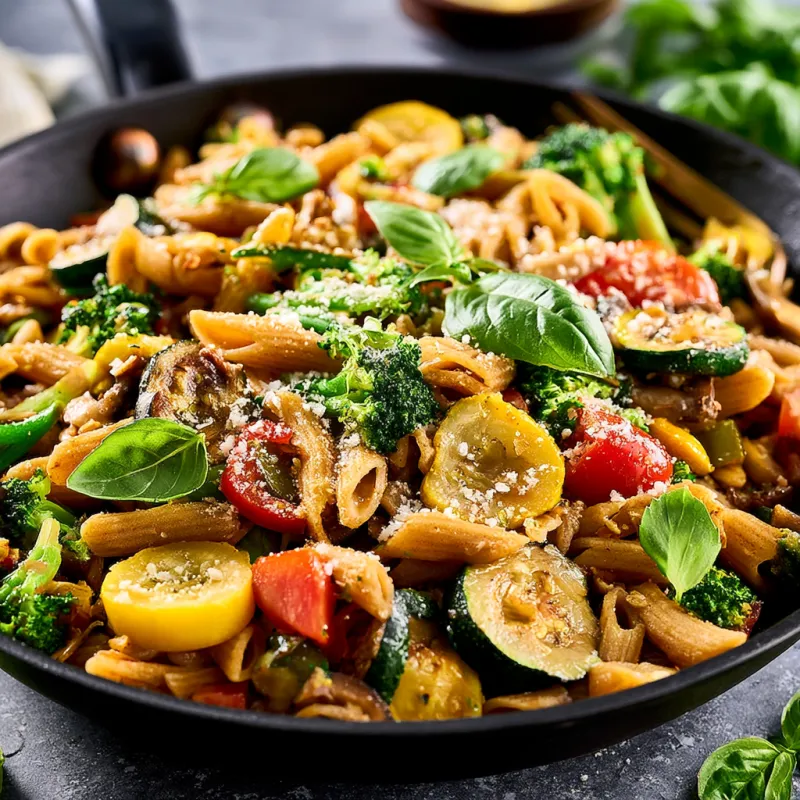
The first thing you notice is the color. Bright orange from the carrots, deep red from the bell pepper, vivid green from the asparagus and zucchini. It’s the kind of dish that looks like spring on a plate. And the aroma — garlic and lemon mingling with the nutty scent of whole wheat pasta — tells you this isn’t just another sad side dish.

Whole wheat veggie primavera is my go-to when I need something that works for a potluck, a weeknight dinner, or a make-ahead lunch. The trick is balancing the hearty pasta with tender-crisp vegetables and a dressing that’s bright but not overpowering. Let me walk you through the method.
Choosing the Right Whole Wheat Pasta
Whole wheat pasta has a stronger flavor and a firmer texture than white pasta. That earthy, nutty taste is perfect here because it stands up to the vegetables and the tangy dressing. I like penne or fusilli for this dish — the ridges and curves catch the dressing and bits of vegetable.
One common mistake is overcooking whole wheat pasta. It can go from al dente to mushy quickly. Cook it according to the package directions, but start checking a minute early. The pasta should be tender but still have a slight bite at the center. After draining, rinse it briefly with cool water to stop the cooking process and remove excess starch. Then toss it with a tablespoon of olive oil to keep it from clumping.
The Vegetable Technique: Tender-Crisp Is the Goal
This is where the dish comes together. You want each vegetable cooked just enough to be tender but still bright and snappy. I use a large skillet over medium-high heat — a 12-inch pan gives you enough room to spread the vegetables in a single layer so they cook evenly, not steam.
Start with the onions and carrots because they take the longest. Cook them for about 3 minutes, stirring occasionally, until the onion is translucent. Then add the bell pepper and zucchini. Cook for 2 minutes — the pepper will soften slightly, and the zucchini will start to look glossy. Finally, add the asparagus and garlic. One minute is all they need. The asparagus turns a brilliant green, and the garlic becomes fragrant. The key visual cue: the vegetables should still have a slight resistance when you bite into them. They will soften a bit more from the residual heat and the dressing, so pulling them off the heat a minute early is the right move.
The Dressing: A Simple, Balanced Emulsion
This dressing is what ties everything together. I keep the ratio at 1 part lemon juice to 3 parts extra-virgin olive oil, with a touch of Dijon mustard for body and a pinch of salt and pepper. The mustard acts as an emulsifier, helping the oil and lemon juice stay combined instead of separating into a pool at the bottom of the bowl.
Whisk the dressing in a small bowl or shake it in a jar until it looks thick and creamy. Taste it — it should be bright and tangy, but not sour. If it’s too sharp, add a tiny splash more oil. If it’s too flat, add a squeeze more lemon.
Assembling and Serving
Combine the cooked pasta, the sautéed vegetables, and the dressing in a large mixing bowl. Gently toss with a large spoon or spatula until everything is evenly coated. Then fold in the fresh basil. The basil adds a final layer of freshness that lifts the whole dish.
You can serve this warm, at room temperature, or chilled. I often make it a few hours ahead and let it sit at room temperature so the flavors meld. If you’re serving it straight from the fridge, let it sit out for 15-20 minutes first — the cold dulls the flavors. Just before serving, sprinkle with Parmesan cheese if you like. It adds a salty, savory note that complements the vegetables.
Make-Ahead Tips
This dish is designed for making ahead. You can prep all the vegetables up to a day in advance and store them in separate containers in the fridge. Cook the pasta and vegetables, then toss with the dressing up to 4 hours before serving. Keep it covered at room temperature if serving within a few hours, or refrigerate if longer. If the pasta absorbs too much dressing overnight, revive it with a splash of lemon juice or a drizzle of olive oil before serving.
Common Mistakes and How to Avoid Them
- Overcooking the vegetables: They should still have a slight crunch. Cook over medium-high heat in batches if needed to avoid crowding the pan.
- Overdressing: Start with less dressing than you think you need. You can always add more, but you can’t take it away. The pasta will absorb some dressing as it sits.
- Skipping the rinse: Rinsing the pasta stops the cooking and removes surface starch, which helps the dressing cling better without making the dish gummy.
Takeaway: Whole wheat veggie primavera is a flexible, forgiving side dish that gets better as it sits. Master the tender-crisp vegetable technique and the simple 3:1 oil-to-acid dressing ratio, and you’ll have a go-to recipe for any occasion.
Frequently Asked Questions
Can I use regular pasta instead of whole wheat?
Yes, you can substitute regular white pasta. Cook it al dente according to package directions. The texture will be slightly less nutty and firm, but it will still work well.
How do I keep the vegetables from getting soggy?
The key is to cook them over medium-high heat and only until tender-crisp. They will continue to soften slightly from residual heat and the dressing, so pulling them off the heat a minute early helps.
What other vegetables can I add?
Broccoli florets, snap peas, cherry tomatoes (halved), or mushrooms all work well. Adjust cooking times so denser vegetables like broccoli go in earlier, and softer ones like tomatoes go in at the end.
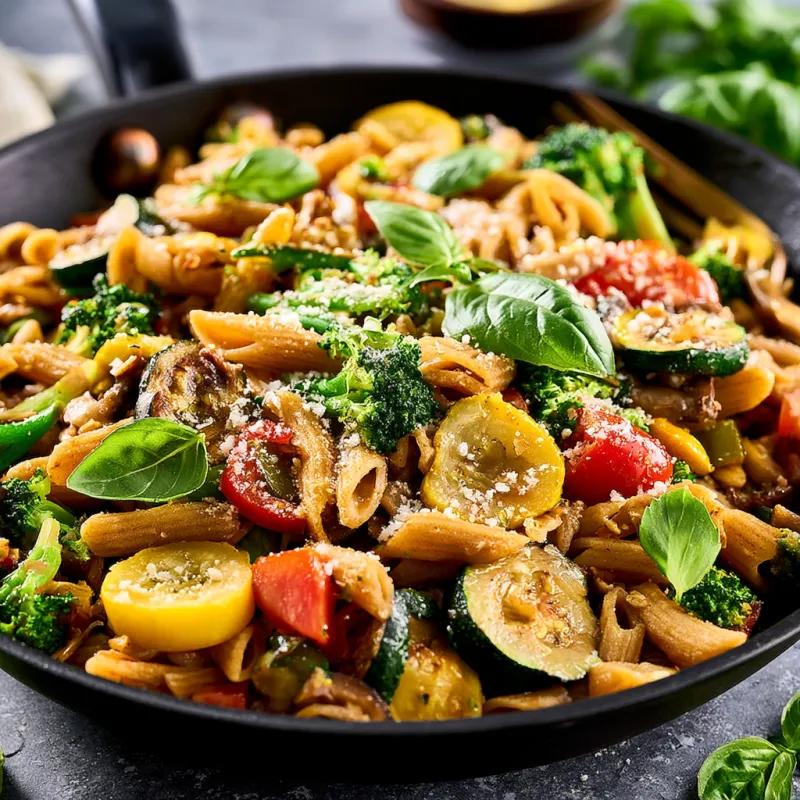
Whole Wheat Veggie Primavera
Ingredients
Equipment
Method
- Bring a large pot of salted water to a rolling boil. Add the whole wheat pasta and cook according to package directions until al dente, usually 8-10 minutes. Drain well and rinse briefly with cool water to stop the cooking. Toss with 1 tablespoon of the olive oil to prevent sticking, and set aside.
- While the pasta cooks, heat the remaining 1 tablespoon olive oil in a large skillet over medium-high heat. Add the onion and carrots, and cook, stirring occasionally, until the onion is translucent, about 3 minutes.
- Add the bell pepper and zucchini to the skillet. Cook, stirring, for 2 minutes, until the pepper softens slightly.
- Add the asparagus and garlic. Cook for 1 minute more, until the asparagus turns bright green and the garlic is fragrant. The vegetables should be tender-crisp — they will soften slightly as they cool. Remove from heat.
- In a small bowl or jar, whisk together the lemon juice, extra-virgin olive oil, Dijon mustard, salt, and pepper until emulsified.
- In a large mixing bowl, combine the cooked pasta, sautéed vegetables, and the dressing. Toss gently to coat everything evenly.
- Fold in the fresh basil. Taste and adjust salt or lemon if needed. Serve warm, at room temperature, or chilled. Top with Parmesan cheese just before serving, if using.