
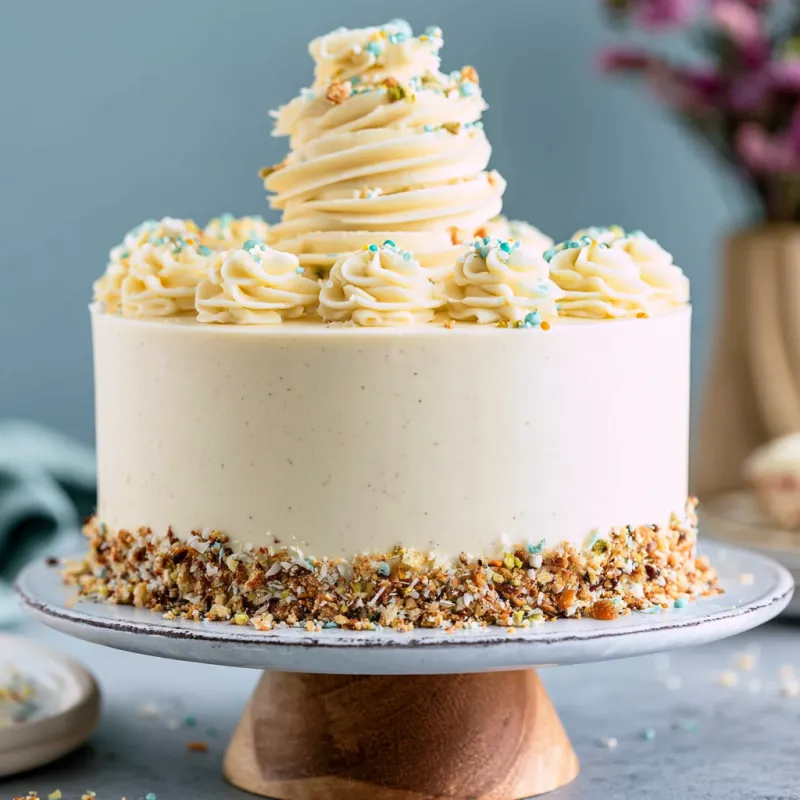
There is something deeply satisfying about a cake that doesn’t try too hard. A single, clean stripe of buttercream. A crumb that gives way with a soft, even spring. No drips, no sprinkles, no fuss. This minimalist vanilla buttercream cake is that cake—the one you make when you want the flavor to speak for itself.

I have tested this recipe many times to get the structure right. The key is a specific ratio: 3 parts flour to 2 parts sugar to 1 part fat by weight. That 3:2:1 ratio gives a cake that is sturdy enough to stack yet tender on the tongue. The buttercream follows a simple 2:1 ratio of powdered sugar to butter, beaten until it is silky and light, not cloying.
Why This Recipe Works
Most vanilla cakes rely on a high ratio of sugar to flour, which makes them sweet but also fragile. By using slightly more flour and a touch less sugar, the crumb becomes more structured. The butter and eggs provide richness without heaviness. The milk, at room temperature, emulsifies into the batter so the cake bakes up evenly, with a pale golden crust and a fine, even interior.
For the buttercream, the technique matters as much as the ingredients. Soften the butter to exactly 65°F (18°C). If it is too cold, the frosting will look curdled. If too warm, it will be soupy. Beat the butter alone first until it is pale and creamy—this aerates it. Then add the sifted powdered sugar slowly, so it does not puff into a cloud. Finally, beat on medium-high for a full 4 to 5 minutes. You will see the frosting transform from a dense paste into a fluffy, spreadable cream.
Ingredients and Substitutions
Use unsalted butter for both cake and frosting so you control the salt level. Whole milk gives the best texture, but 2% will work. For the eggs, room temperature is not optional—cold eggs will seize the butter and create a dense cake. If you forget to take them out ahead, place the eggs in a bowl of warm water for 5 minutes.
For a dairy-free version, substitute the butter with a high-fat plant-based block butter (not spreadable tubs) and use oat or soy milk. The cake will be slightly less tender but still good. The frosting will need a little extra powdered sugar to firm up. Note: this recipe contains dairy, eggs, and gluten. For specific dietary needs, consult a qualified professional.
Step-by-Step Method
Making the Cake Batter
Whisk the dry ingredients together to distribute the baking powder evenly. In a stand mixer, beat the butter until it is creamy—about 1 minute on medium. Add the sugar and beat for 3 to 4 minutes. You want the mixture to become visibly lighter in color and fluffy in texture. This is called creaming, and it traps air that helps the cake rise.
Add the eggs one at a time. If the batter looks curdled after an egg, do not panic—it will come together once the flour is added. Scrape the bowl after each addition. Add the vanilla.
Alternate adding the flour mixture and the milk, starting and ending with flour. Mix on low speed just until the flour disappears. Overmixing will develop gluten and make the cake tough. The batter will be thick and smooth, not runny.
Baking
Divide the batter evenly between two greased and parchment-lined 8-inch pans. I weigh the pans to ensure each gets about 520 grams. Bake at 350°F (177°C) for 28 to 32 minutes. The cake is done when a toothpick inserted in the center comes out with a few moist crumbs attached—not wet batter. Let the cakes cool in the pans for 10 minutes, then turn them onto a wire rack. Cool completely before frosting. Warm cake will melt the buttercream.
Making the Buttercream
In a clean mixer bowl, beat the softened butter on medium until it is smooth and pale, about 2 minutes. Add the sifted powdered sugar one cup at a time, mixing on low to avoid a sugar cloud. Once all sugar is incorporated, add the cream, vanilla, and salt. Beat on medium-high for 4 to 5 minutes. The frosting should be light, spreadable, and hold a peak when you lift the beater.
Assembling the Cake
Use a serrated knife to level the tops of the cakes if they have domed. Place one layer on a cake board or plate. Spread about 1 cup of buttercream evenly on top. Place the second layer on top, bottom side down for a flat top. Apply a thin crumb coat—a layer of frosting that traps any loose crumbs. Refrigerate for 15 minutes to set.
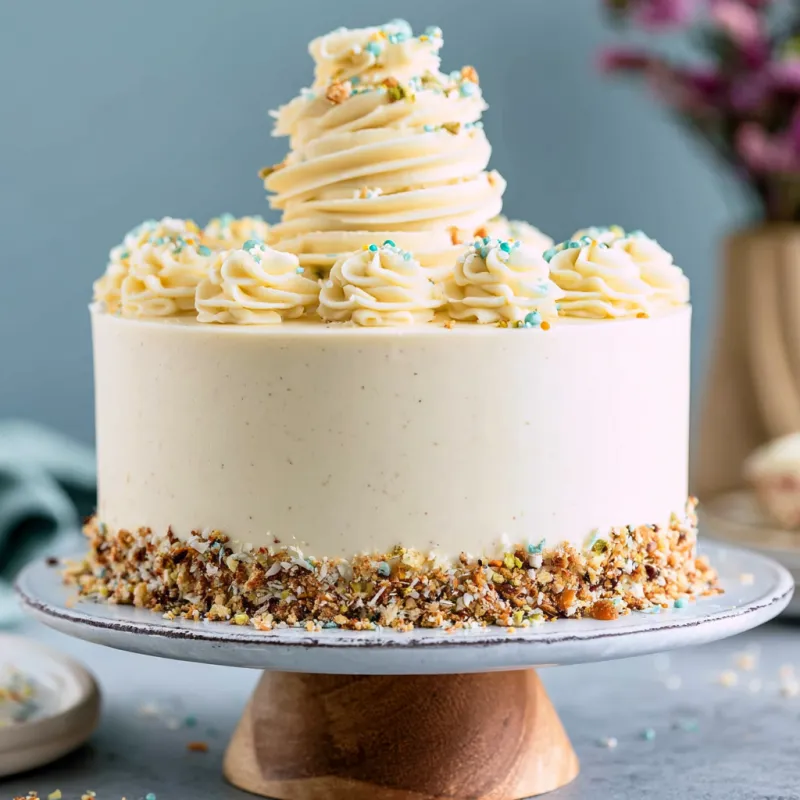
Apply the final coat of buttercream. For a minimalist look, use an offset spatula to create a smooth, even surface. Keep the top flat and the sides clean. You can add a few gentle swirls on top with a small piping tip, or leave it plain. A single fresh berry or a small edible flower is all the decoration you need.
Common Mistakes and How to Avoid Them
Butter too cold or too warm: Measure its temperature with an instant-read thermometer if you have one. 65°F (18°C) is the sweet spot.
Overmixing the batter: Once the flour is added, mix only until it disappears. A few streaks of flour are fine.
Skipping the crumb coat: This step traps crumbs so the final coat stays pristine. Do not skip it.
Frosting the cake while warm: The buttercream will slide off. Patience pays off.
Storage and Serving
Store the cake in an airtight container at room temperature for up to 2 days. If your kitchen is warm, refrigerate it—but bring it to room temperature before serving for the best texture and flavor. The cake can also be refrigerated for up to 5 days. To freeze, wrap the unfrosted cake layers tightly in plastic wrap and freeze for up to 3 months. Thaw at room temperature before frosting.
This minimalist vanilla buttercream cake is proof that simplicity, done with care, is enough. A clean crumb, a smooth frosting, and the quiet pleasure of a well-made slice.
Frequently Asked Questions
Why is my buttercream too sweet?
Use a 2:1 ratio of powdered sugar to butter by weight (e.g., 400g sugar to 200g butter). Add a pinch of salt and a teaspoon of vanilla to balance the sweetness. Beat for a full 5 minutes to incorporate air, which lightens the texture.
Can I make this cake in advance?
Yes. Bake the cake layers up to 2 days ahead and wrap tightly in plastic wrap at room temperature. Make the buttercream up to 1 week ahead and refrigerate in an airtight container; bring to room temperature and re-whip before using.
How do I get clean, sharp edges on my buttercream?
Chill the crumb-coated cake for 15 minutes in the fridge. Then apply a generous final coat and use a bench scraper held at a 45-degree angle while spinning the cake on a turntable. Wipe the scraper clean after each pass.
Minimalist Vanilla Buttercream Cake
Ingredients
Equipment
Method
- Preheat oven to 350°F (177°C). Grease two 8-inch round cake pans and line bottoms with parchment paper.
- Whisk flour, baking powder, and salt in a bowl; set aside.
- In a stand mixer with paddle attachment, beat butter on medium until creamy, about 1 minute. Add sugar and beat on medium-high until light and fluffy, 3–4 minutes. Scrape bowl.
- Add eggs one at a time, beating 30 seconds after each. Add vanilla and beat until combined.
- On low speed, add flour mixture in three additions, alternating with milk in two additions, starting and ending with flour. Mix just until combined—do not overmix. Batter will be thick and smooth.
- Divide batter evenly between pans (about 520g each). Bake 28–32 minutes, until a toothpick inserted in center comes out with a few moist crumbs. Cool in pans 10 minutes, then turn out onto a rack to cool completely.
- For buttercream: In a clean mixer bowl, beat butter on medium until smooth and pale, about 2 minutes. Add powdered sugar one cup at a time on low, then add cream, vanilla, and salt. Beat on medium-high for 4–5 minutes until light and fluffy. If too thick, add 1 tablespoon more cream.
- Level cake layers with a serrated knife. Place one layer on a cake board or plate. Spread about 1 cup buttercream evenly on top. Place second layer on top. Apply a thin crumb coat of buttercream around the entire cake. Refrigerate 15 minutes.
- Apply final coat of buttercream, smoothing with an offset spatula. For a minimalist look, keep edges clean and top flat. Decorate with a few simple swirls or fresh berries if desired.