
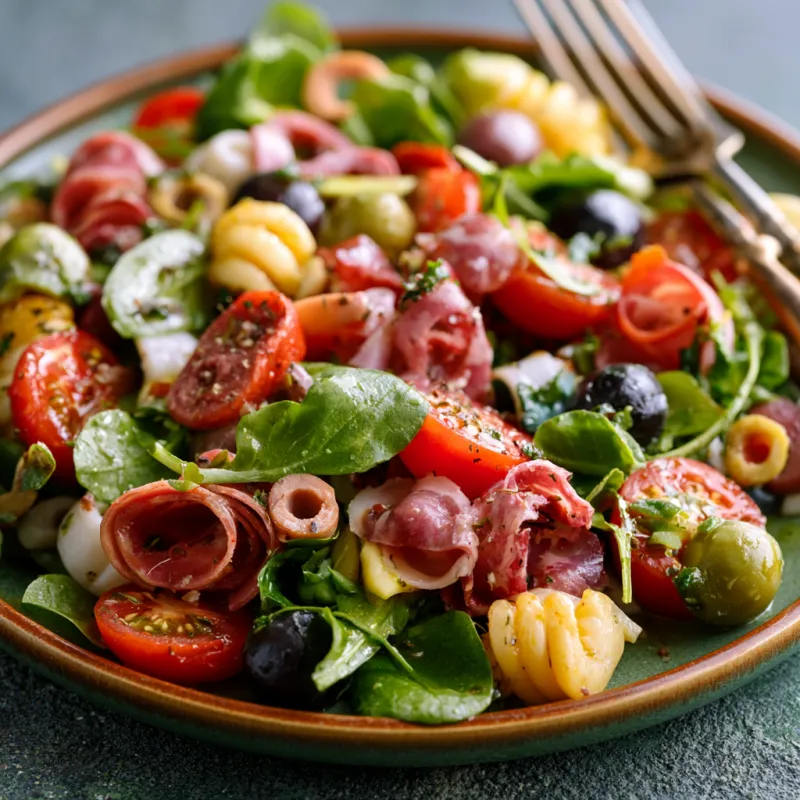
There’s a moment when you pull the lid off a jar of pepperoncini and the sharp, briny aroma hits your nose. That’s the scent I want in this salad. Not a shy whisper of vinegar, but a confident tang that wakes up every bite. An Italian antipasto salad should feel like a platter of cured meats and pickled vegetables, but in a bowl, with crunch and a dressing that ties it all together without drowning it.

I’ve tested this method more times than I can count, and the trick is twofold: keep the lettuce bone-dry, and use a little pepperoncini brine in the vinaigrette. That one tablespoon of brine does more than add acidity—it brings the salad into focus, bridging the salty salami and the creamy mozzarella. Here’s how to build it right.
Why This Method Works
Most antipasto salads suffer from one of two problems: either the dressing is too heavy and coats everything in a slick of oil, or the lettuce gets soggy within minutes. My approach avoids both by using a vinaigrette with a 3:1 oil-to-acid ratio, but with a twist. I replace one-third of the vinegar with pepperoncini brine. This keeps the dressing bright and slightly spicy, without needing extra salt. The Dijon mustard acts as an emulsifier, so the vinaigrette clings to the leaves instead of pooling at the bottom.
The romaine is non-negotiable here. Its sturdy ribs hold up to the weight of salami and artichokes, and its mild flavor lets the toppings shine. Wash the leaves, spin them until they’re completely dry, then tear them—don’t cut with a knife, which can bruise the edges. Dry lettuce is the single most important step in any crisp salad. If you see water droplets in the bowl after spinning, blot them with a clean kitchen towel.
Building the Salad: Layers and Texture
I like to think of this salad as a composition, not a pile. Start with the lettuce as the base. Then add the salami ribbons—cutting them into thin strips means you get a bit of meat in every forkful, not a clump. The mozzarella pearls are ideal because they’re bite-sized and creamy; if you can’t find pearls, cut a fresh mozzarella ball into 1/2-inch cubes. Pat them dry with paper towels so they don’t release whey into the salad.
Marinated artichoke hearts bring a tender, tangy note. I drain them well and give them a quick chop. Roasted red peppers add sweetness and a soft, silky texture that contrasts with the crunchy romaine. Kalamata olives contribute a briny punch, and the pepperoncini slices provide a gentle heat. Thinly sliced red onion is optional, but I love the sharp bite it adds—soak the slices in cold water for 10 minutes if you want to mellow their intensity.
The Vinaigrette: A Balanced Emulsion
Here’s the exact ratio I use: 3 tablespoons olive oil, 1 tablespoon red wine vinegar, 1 tablespoon pepperoncini brine, 1 teaspoon Dijon mustard, 1/2 teaspoon dried oregano, 1/4 teaspoon salt, and a pinch of black pepper. Whisk it in a small bowl or shake it in a jar. The mustard is the key—it helps the oil and vinegar stay together, so the dressing doesn’t separate on the salad. Taste it before using. It should be tangy but not harsh, with a subtle herbal note from the oregano. If it tastes too sharp, add a tiny pinch of sugar; if too flat, add a few drops more vinegar.
When you’re ready to serve, pour about three-quarters of the dressing over the lettuce and toss with your hands—this is gentler than tongs and ensures even coverage. Then add the toppings, drizzle the remaining dressing, and toss once more. The goal is to coat every component lightly, not to drench them.
Make-Ahead Strategy (Without the Sog)
If you’re entertaining, you can prep everything hours in advance. Wash and dry the romaine, then store it in a large bowl covered with a damp paper towel and plastic wrap. Keep the toppings in separate containers in the fridge. For the dressing, combine the vinegar, brine, mustard, oregano, salt, and pepper in a jar, but don’t add the oil until just before serving. This prevents the dressing from breaking and keeps the flavors fresh. When you’re ready, add the oil, shake, and toss.
Common Mistakes to Avoid
Overdressing: You can always add more dressing, but you can’t take it out. Start with less, toss, and add more if needed. A properly dressed salad should have a subtle sheen, not a puddle at the bottom of the bowl.
Wet lettuce: This is the number one culprit for a limp salad. Spin, blot, and check again. Even a little moisture will dilute the dressing.
Bitter olives: Taste your olives before adding them. Some kalamatas can be overly bitter. If they’re too strong, rinse them quickly under cold water and pat dry.
Serving Suggestions
This salad works beautifully as a main course on a warm evening, paired with crusty bread and a glass of crisp white wine. As a side, it’s perfect alongside grilled chicken, fish, or a simple frittata. I sometimes add a handful of arugula for a peppery kick, or swap the salami for prosciutto if I want a milder flavor.
Takeaway
An Italian antipasto salad doesn’t need to be complicated. Focus on dry, crisp lettuce, a bright vinaigrette with a brine boost, and toppings that offer a mix of salty, tangy, creamy, and crunchy. Prep the components separately, dress at the last minute, and you’ll have a salad that tastes like it came from a trattoria, not a rushed kitchen.
Frequently Asked Questions
Can I use a different lettuce instead of romaine?
Yes, you can substitute romaine with a crisp variety like iceberg or a sturdy mix like radicchio and endive. Avoid tender greens like spinach or arugula, as they will wilt under the dressing and heavier toppings.
What if I don’t have pepperoncini brine?
No problem. Swap it with an equal amount of red wine vinegar or white balsamic vinegar. The brine adds a subtle tang and mild heat, but the salad will still be delicious with just vinegar. If you want a similar briny flavor, use a splash of olive brine instead.
How do I keep the salad from getting soggy if I’m making it ahead?
The key is to store the dressing separately and not combine it with the lettuce until just before serving. Keep the lettuce dry in a salad spinner or lined with paper towels. Prep all the toppings and store them in separate containers. Assemble and dress right before eating.
Is this salad gluten-free?
Yes, this Italian antipasto salad is naturally gluten-free as written. Always double-check labels on cured meats and marinated vegetables, as some brands may include gluten-based additives. For personalized advice, consult a qualified professional.
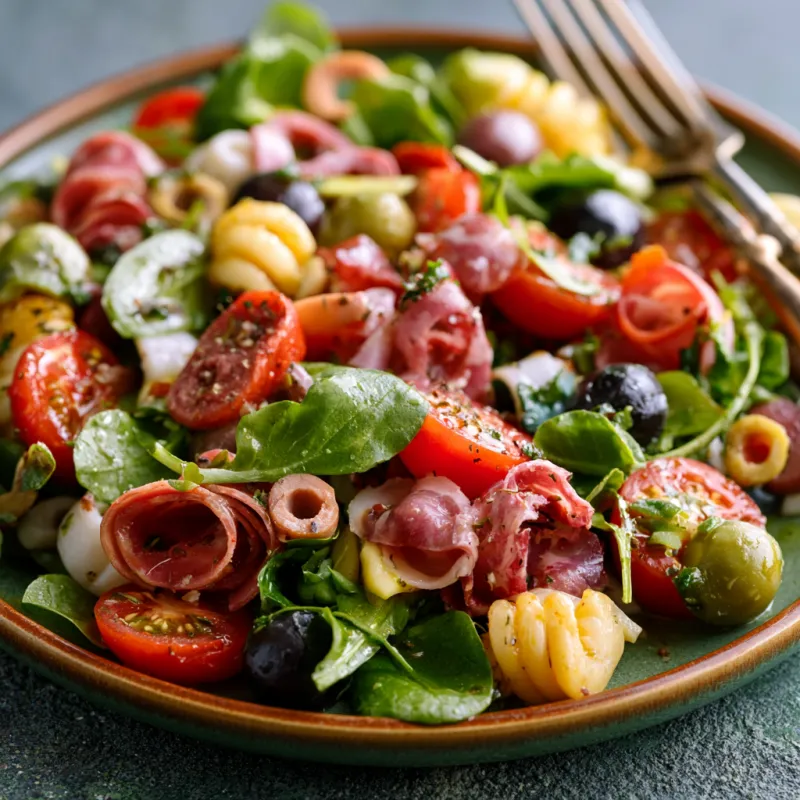
Italian Antipasto Salad
Ingredients
Equipment
Method
- Prepare the romaine: Wash and dry the romaine thoroughly using a salad spinner. Moisture is the enemy of a crisp salad. Tear the leaves into bite-sized pieces and place in a large salad bowl.
- Prep the toppings: Cut the salami into ribbons, halve the mozzarella pearls if needed, quarter the artichokes, slice the roasted peppers, halve the olives, and thinly slice the red onion. Set aside.
- Make the vinaigrette: In a small bowl or a jar with a tight-fitting lid, combine the olive oil, red wine vinegar, pepperoncini brine, Dijon mustard, dried oregano, salt, and pepper. Whisk vigorously or shake until emulsified. Taste and adjust salt or acid—the brine adds a gentle tang without overwhelming.
- Assemble the salad: Just before serving, pour about three-quarters of the dressing over the romaine. Toss gently but thoroughly with your hands or tongs so every leaf is lightly coated. Add the salami, mozzarella, artichokes, roasted peppers, olives, pepperoncini, and red onion. Drizzle the remaining dressing over the top and toss again. Garnish with torn basil.
- Serve immediately: Transfer to plates or a serving platter. The salad is best eaten within 30 minutes of dressing.