
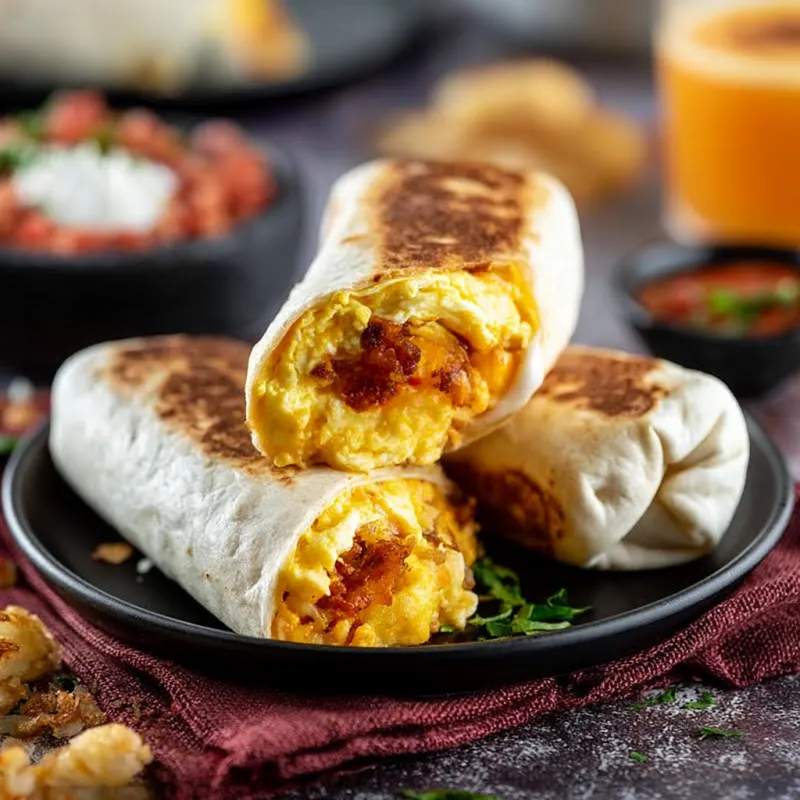
There’s a specific sound a good breakfast burrito makes when you bite through the tortilla. A clean, crisp snap that gives way to a soft, savory filling. No sad, steamy collapse. No puddle of liquid on the plate. After years of testing, I’ve landed on a method that delivers that snap every time, even after weeks in the freezer. The secret? It’s not just the ingredients, but the order you cook them and the way you handle moisture from the very first step.

The Moisture Problem (And How to Fix It)
The number one reason freezer breakfast burritos fail is water. Eggs release liquid as they cook. Hash browns hold onto moisture like a sponge. Vegetables sweat. If you don’t address each source, that water turns to steam inside the foil, softening the tortilla into a limp, soggy mess. The fix is a two-part technique: squeeze and sequence.
Step 1: Squeeze Your Hash Browns
Frozen shredded hash browns are a time-saver, but they are packed with ice crystals. Thaw them completely in the refrigerator overnight, then transfer to a clean kitchen towel. Gather the corners and twist firmly over the sink. You’ll be shocked at how much liquid comes out—up to half a cup. This single step removes more moisture than any cooking method can. Aim for hash browns that feel dry to the touch, not damp.
Step 2: Cook in the Right Order
I always cook the vegetables and hash browns first, before adding the eggs. This gives the potatoes a head start to brown and crisp in the butter, and the moisture from the onions and peppers evaporates in the heat. When the eggs finally go in, they cook into the hash browns, absorbing some of that starch and fat rather than releasing water into a separate pool. Keep the heat at medium, not high, and stir gently. You want the eggs just set—soft, not dry. They will finish cooking when you reheat the burrito later.
The Ratio That Works
After many batches, I keep the ratio at roughly 1.5 cups of filling to one 10-inch tortilla. That’s enough to feel substantial without tearing the tortilla or making it impossible to roll tightly. For the filling itself, I aim for a mix of one part egg, one part hash browns, one part meat, and half part cheese. This balance ensures every bite has texture from the potatoes, protein from the eggs and sausage, and richness from the cheese. Too much cheese and the filling turns greasy. Too many eggs and it becomes dry and rubbery.
The Wrap That Locks in Freshness
How you wrap matters as much as what’s inside. Aluminum foil is non-negotiable here. Plastic wrap lets in air and freezer odors. Foil creates a barrier that prevents freezer burn and holds the shape tight. Here’s the technique: after folding the sides over the filling, roll from the bottom edge toward you, tucking the filling inward with your fingers as you go. The goal is a snug cylinder with no air pockets. Press gently as you roll. When you reach the end, fold the two open ends under the burrito like a present. This keeps everything sealed during freezing.
Let the wrapped burritos sit on a baking sheet in the freezer for at least two hours before bagging. This flash-freeze step prevents them from sticking together. Once solid, transfer to a zip-top bag, press out as much air as possible, and seal. Label with the date and contents.
Reheating for That First-Bite Crisp
The microwave alone will give you a soft tortilla. That’s fine if you’re in a rush, but for the best texture, do a two-step reheat. First, remove the foil and wrap the frozen burrito in a damp paper towel. Microwave on high for two minutes, flip, then another one to two minutes until the center reaches 165°F on an instant-read thermometer. Then, unwrap and place the burrito seam-side down in a dry nonstick skillet over medium heat. Let it sit for one to two minutes per side until the tortilla is golden and crisp. That’s the sound you’re after.
If you don’t have a microwave, you can go straight from freezer to a 350°F oven. Wrap in foil (remove the original foil first) and bake for 15-20 minutes, then unwrap and finish under the broiler for a minute or two for crispness.
A Few More Things Worth Knowing
Use large tortillas, at least 10 inches. Smaller ones won’t hold the filling and will tear when rolled. Flour tortillas freeze and reheat better than corn, which tends to crack. If you’re using a different protein like bacon or ham, cook it until crisp or browned, then drain on paper towels before adding. Any extra fat in the filling will solidify in the freezer and turn greasy upon reheating.
For a vegetarian version, skip the meat and add a can of drained, rinsed black beans or a cup of sautéed mushrooms. The beans add fiber and help bind the filling. Just make sure to squeeze any mushrooms dry after cooking, just like the hash browns.
If you have specific dietary needs or health concerns, please consult a qualified professional to tailor this recipe to your situation.
The Takeaway
Freezer breakfast burritos don’t have to be a compromise. With a little attention to moisture management and a proper wrap, you can have a breakfast that tastes as good as the day you made it. The crisp tortilla, the soft eggs, the browned potatoes—all of it, waiting in your freezer for the morning you need it most.
Frequently Asked Questions
Why do my frozen breakfast burritos get soggy when I reheat them?
Sogginess usually comes from excess moisture in the filling. The key is to squeeze thawed hash browns dry before cooking and to cook the eggs just until set, not watery. Also, letting the filling cool completely before wrapping prevents steam from softening the tortilla.
Can I use raw potatoes instead of frozen hash browns?
I don’t recommend it. Raw potatoes release too much moisture during cooking, which leads to a wet filling. Frozen hash browns are pre-cooked and, when thawed and squeezed, give you a drier, crisper texture.
How long do these burritos last in the freezer?
Properly wrapped in foil and stored in a sealed freezer bag, they maintain best quality for up to 3 months. After that, the tortilla may become brittle or develop freezer burn.
What’s the best way to reheat without a microwave?
Remove foil, wrap in damp paper towel, and place in a 350°F oven for 15-20 minutes, flipping halfway. Or, unwrap and reheat in a covered skillet over low heat with a splash of water, turning occasionally, until warmed through.
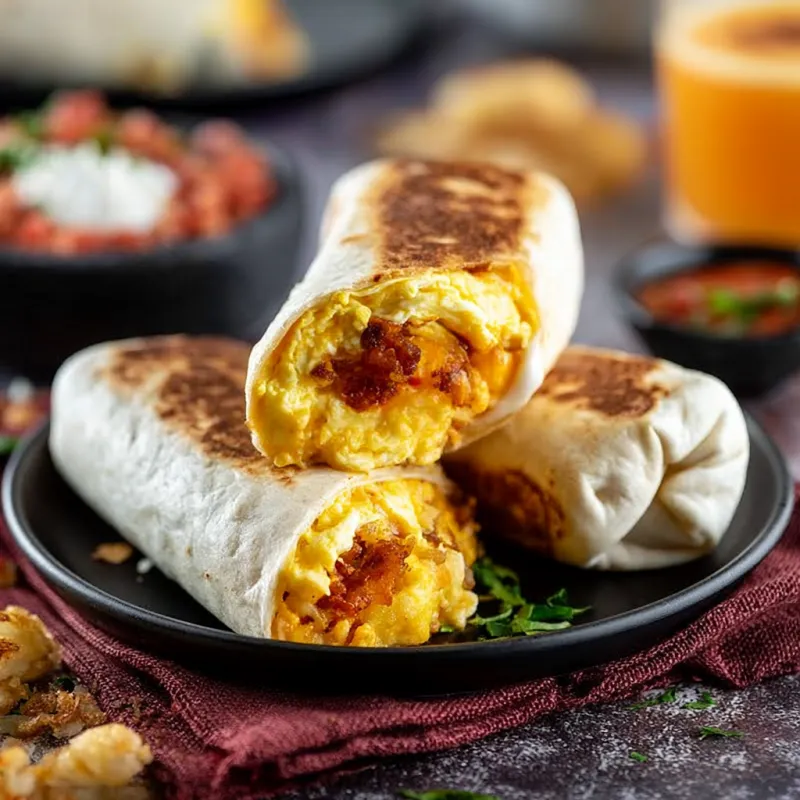
Freezer Breakfast Burritos
Ingredients
Equipment
Method
- In a large bowl, whisk together eggs, milk, salt, and pepper until uniform and slightly frothy. Set aside.
- In a large nonstick skillet over medium-high heat, cook the sausage, breaking it into small crumbles, until browned and cooked through (internal temp 160°F). Transfer to a bowl lined with paper towels to drain excess fat.
- Reduce heat to medium. Add butter to the same skillet. Once melted, add onion and bell pepper. Cook, stirring occasionally, until softened and translucent, about 5 minutes.
- Add the thawed hash browns to the skillet. Spread them into an even layer and let cook undisturbed for 3-4 minutes until the bottom is golden. Stir and repeat until most shreds are browned and crisp.
- Pour the egg mixture over the hash browns and vegetables. Let sit for 30 seconds, then gently stir with a silicone spatula, pushing cooked eggs from the edges toward the center. Cook until the eggs are just set but still soft (they will finish cooking in the microwave later). Remove from heat immediately.
- Stir the cooked sausage and shredded cheddar into the egg mixture until combined. Let cool for 10 minutes at room temperature.
- Lay a tortilla on a clean work surface. Spoon about 3/4 cup of filling into a log shape across the center, leaving a 2-inch border on each side.
- Fold the two sides over the filling, then roll from the bottom edge tightly, tucking as you go. Wrap each burrito tightly in aluminum foil.
- Place all foil-wrapped burritos on a baking sheet and freeze for 2 hours until solid. Transfer to a labeled freezer bag, squeezing out excess air. Freeze for up to 3 months.
- To reheat: Remove foil and wrap burrito in a damp paper towel. Microwave on high for 2 minutes (for one burrito), then flip and microwave another 1-2 minutes until center reaches 165°F. For a crispy exterior, finish in a dry skillet over medium heat for 1-2 minutes per side.