
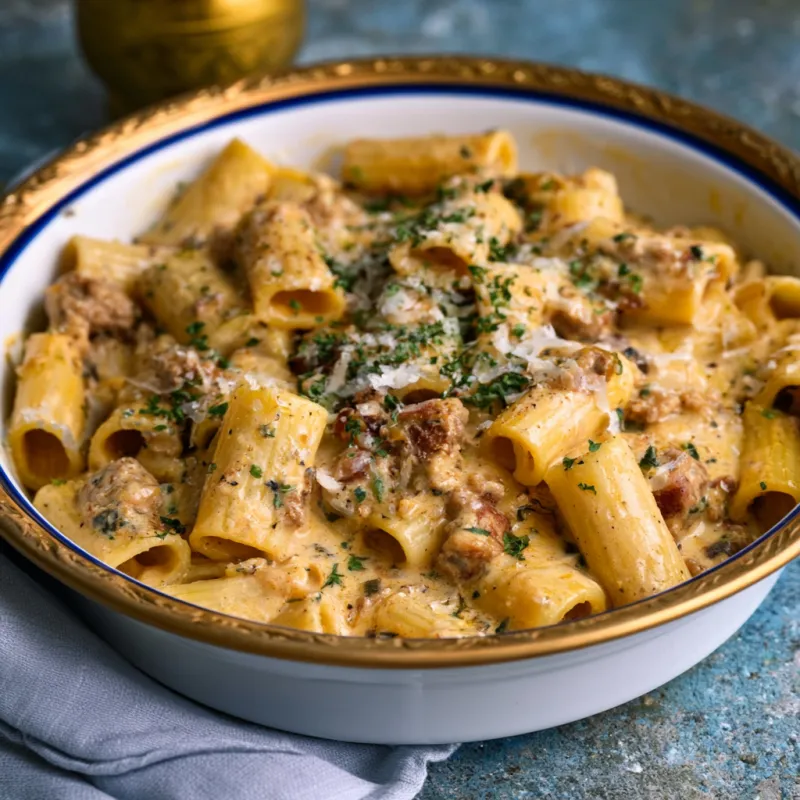
The smell of sausage browning in olive oil fills the kitchen. It’s the kind of aroma that makes everyone wander in and ask, “What’s for dinner?” This creamy sausage rigatoni is my answer on busy weeknights when I want something that feels indulgent but comes together in one pan without a lot of fuss.

The trick to a creamy sauce without heavy cream? It’s all about technique. I use a combination of pasta starch, a bit of cream cheese, and good Parmesan. The pasta cooks right in the pan, releasing starch that thickens the broth into a silky coating. The cream cheese adds richness without weighing things down, and the Parmesan brings savory depth. The result is a sauce that clings to every ridge and tube of the rigatoni.
Why This Method Works
Cooking the pasta directly in the sauce—not in a separate pot of boiling water—is the key. The starches released from the rigatoni as it cooks naturally thicken the liquid, creating a sauce that’s smooth and cohesive. No roux, no cream, no extra dishes. I keep the ratio at 2 1/2 cups of liquid (broth plus wine) to 1 pound of pasta. That’s just enough to cook the pasta and leave a saucy finish. Too much liquid and you’ll have soup; too little and the pasta will be dry. Trust the ratio.
Choosing Your Sausage
Sweet Italian sausage gives a mild, fennel-forward flavor. Spicy adds a pleasant kick. For this recipe, I prefer a good-quality sausage with a coarse grind—it browns better and adds texture. Remove the casings before cooking so the meat crumbles easily. If you can only find links, slit them open with a knife and squeeze out the meat.
Building the Base
After browning the sausage, you’ll cook the onion in the rendered fat. That fat is flavor, so don’t pour it out. The onion should go translucent—about 4 minutes—before you add the garlic. Garlic burns quickly, so keep it moving for just 30 seconds. Then comes the tomato paste. Cooking it for a full minute deepens its flavor, turning it from raw and bright to rich and almost caramelized. This step matters. Don’t rush it.
Deglaze the pan with white wine (or broth). Scrape up all those browned bits from the bottom—they’re pure flavor. Let the wine reduce by half before adding the broth. That reduction concentrates the taste and removes any raw alcohol edge.
The Cooking Process
Add the broth and bring it to a boil. Stir in the rigatoni, making sure every piece is submerged. Keep the heat at a vigorous simmer—not a rolling boil, which can evaporate the liquid too fast. Stir occasionally at first, then more frequently toward the end as the liquid reduces. This prevents the pasta from sticking to the bottom. You’ll know it’s done when the pasta is al dente and the sauce has thickened enough to coat the back of a spoon. Most of the liquid should be absorbed, but there should still be a little saucy sheen.
Here’s where the cream cheese comes in. Remove the pan from the heat completely. Add the softened cream cheese in small cubes and stir until it melts into the sauce. If the pan is too hot, the cream cheese can separate and turn grainy. Off the heat, it melts smoothly into a velvety finish. Then stir in the Parmesan and the cooked sausage.
Common Mistake to Avoid
Don’t add all the cheese at once. Parmesan can clump if dumped in a pile. Sprinkle it in while stirring, and it will distribute evenly. Also, don’t skip the rest time after cooking. Let the pasta sit off the heat for just a minute before serving—the sauce will continue to thicken and cling to the rigatoni.
Serving and Storage
Serve immediately in warm bowls. The sauce is at its creamiest right off the heat. Garnish with fresh parsley and extra Parmesan for a bright finish. Leftovers can be stored in the fridge for up to three days, but the pasta will absorb liquid and the sauce will thicken. Reheat gently on the stovetop with a splash of broth or water. Freezing isn’t recommended because the cream cheese sauce can break when thawed.
One Final Tip
If you want a little extra green, stir in a handful of baby spinach at the end, just until wilted. It adds color and a bit of freshness without overpowering the dish.
This creamy sausage rigatoni is the kind of meal that feels like a treat but fits into a regular weeknight. One pan, bold flavor, and a sauce that’s surprisingly light. Give it a try, and you’ll see why cooking the pasta in the pan is a game-changer.
Frequently Asked Questions
Can I use a different pasta shape?
Yes, but stick with short, sturdy shapes like penne, ziti, or fusilli. Long pasta like spaghetti won’t hold the sauce as well and may cook unevenly in the one-pan method.
Why is my sauce not creamy?
The cream cheese needs to be softened and cut into small cubes so it melts smoothly. If the pan is too hot, the cream cheese can curdle. Remove from heat before adding it, and stir until fully incorporated. If the sauce seems thin, let it rest off the heat for a minute—it will thicken as it cools slightly.
Can I make this without wine?
Absolutely. Replace the white wine with an equal amount of chicken broth. The wine adds acidity and depth, but the broth will still work. You can also add a squeeze of lemon juice at the end for brightness.
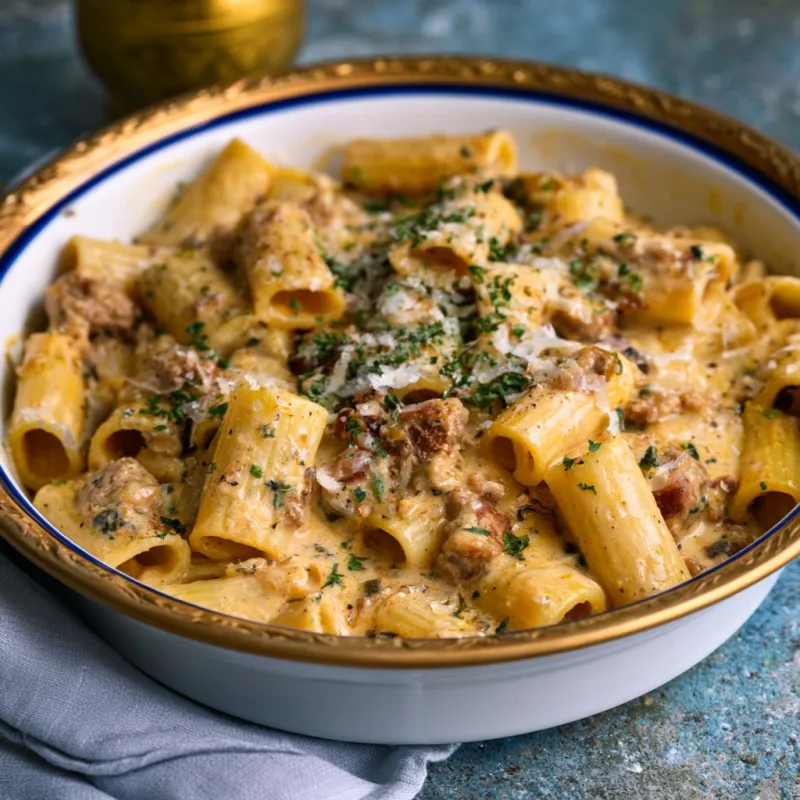
Creamy Sausage Rigatoni
Ingredients
Equipment
Method
- Heat olive oil in a 12-inch skillet or Dutch oven over medium-high heat. Add the sausage and cook, breaking it into small pieces with a wooden spoon, until browned and cooked through, about 5-7 minutes. Use a slotted spoon to transfer the sausage to a plate, leaving the rendered fat in the pan.
- Reduce heat to medium. Add the diced onion and cook, stirring occasionally, until softened and translucent, about 4 minutes. Stir in the garlic and red pepper flakes (if using) and cook for 30 seconds until fragrant.
- Add the tomato paste and stir constantly for 1 minute, letting it darken slightly and caramelize. Pour in the white wine (or broth) and scrape up any browned bits from the bottom of the pan. Let it simmer until reduced by half, about 1-2 minutes.
- Pour in the chicken broth and bring to a boil. Add the rigatoni, stirring to ensure all pasta is submerged. Return to a boil, then reduce heat to a vigorous simmer. Cook, stirring occasionally, until the pasta is al dente and most of the liquid is absorbed, about 10-12 minutes. Stir more frequently toward the end to prevent sticking.
- Remove the pan from the heat. Add the cream cheese cubes and stir until completely melted and incorporated into the sauce. The sauce should look creamy and coat the pasta nicely.
- Return the cooked sausage to the pan, along with the Parmesan cheese. Stir until the cheese is melted and everything is well combined. Taste and season with salt and black pepper as needed. The Parmesan adds salt, so go easy.
- Serve immediately, garnished with fresh parsley and extra Parmesan. For best texture, eat right away—the sauce thickens as it cools.