
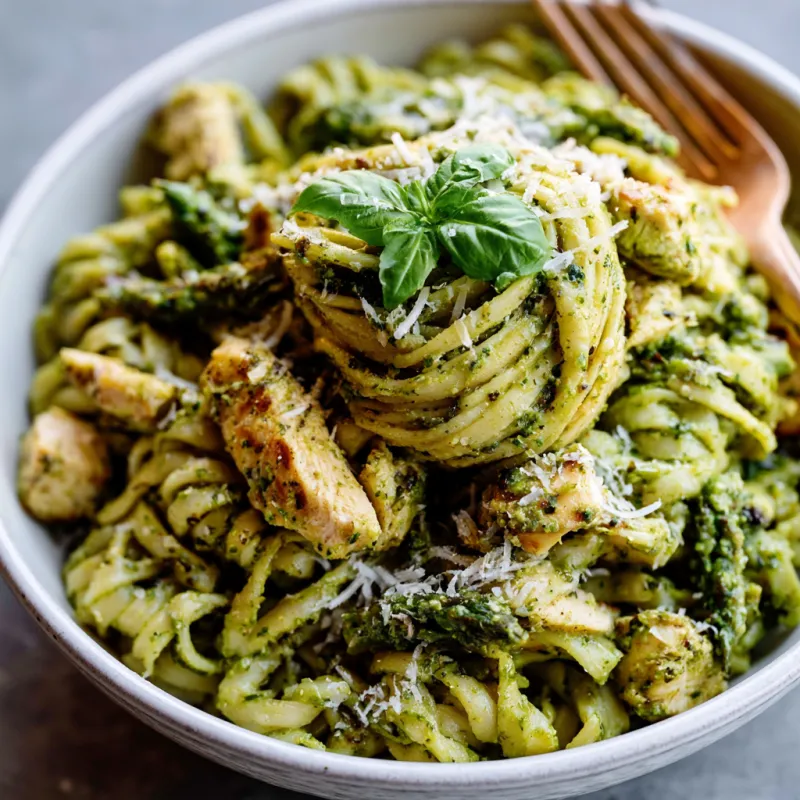
The first time I made chicken pesto pasta, the chicken came out dry and the sauce turned into a sad, oily puddle at the bottom of the bowl. Not my finest moment. But after a dozen more tries, I landed on a method that delivers juicy chicken and a creamy, clingy sauce every time — no heavy cream required for that silky texture? Actually, I do use a splash, but the real trick is in the pasta water and the order of operations.

Here’s the thing: pesto is already packed with oil and cheese. If you just toss it with hot pasta and chicken, the oil separates and the dish feels greasy. My fix? Emulsify the pesto into a light sauce using broth and a little reserved pasta water. The starch in the water binds everything together, so each piece of pasta gets coated without feeling heavy. And the chicken? Thin cutlets cooked hot and fast, then rested. No dry shreds here.
Why This Method Works
Most recipes treat chicken and pasta as separate elements that happen to share a plate. I want them to work together. By cooking the chicken first and building the sauce in the same pan, you capture all those browned bits (fond) that carry deep savory flavor. Then the pasta finishes cooking in that sauce, absorbing it from the inside out.
The ratio I keep in mind: for every 12 ounces of pasta, I use ⅓ cup of pesto and ¾ cup of liquid (half broth, half cream). That gives a sauce that’s rich enough to feel indulgent but light enough to let the basil flavor shine. If you want to skip the cream entirely, substitute an extra ¼ cup of broth and ¼ cup of pasta water — the starch will still give you a velvety finish.
Key Ingredients & Substitutions
Pasta: Penne or fusilli are my go-to. Their ridges and hollows catch the sauce better than flat noodles. Cook it one minute less than the package says — it will finish cooking in the skillet.
Chicken: Boneless, skinless breasts sliced into cutlets. Thighs work too, but increase cook time by 1-2 minutes per side. Always check for 165°F with an instant-read thermometer.
Pesto: Store-bought is fine. Look for a brand with basil listed first, not oil or cheese. If your pesto is very thick, stir in a teaspoon of olive oil before measuring.
Dairy-free option: Full-fat coconut milk replaces cream beautifully. The coconut flavor is subtle and pairs surprisingly well with basil. Omit the Parmesan or use a dairy-free alternative.
Nut-free option: Use sunflower seed pesto or make your own with pumpkin seeds. Most store-bought pesto contains pine nuts, so check the label.
The Step-by-Step That Matters
1. Cook the pasta to just under al dente
Boil in well-salted water (it should taste like the sea). Reserve a full cup of pasta water before draining — you won’t use all of it, but having extra means you can adjust the sauce consistency without scrambling. Drain without rinsing; you want that starch on the surface.
2. Sear the chicken cutlets hot and fast
Pat the chicken very dry. A wet surface steams instead of browns. Heat the skillet until a drop of water sizzles and evaporates instantly. Cook the cutlets in a single layer — crowding drops the pan temperature and leads to steaming. If your skillet is small, cook in two batches. The cutlets are done when golden brown on both sides and the thickest part reads 165°F. Let them rest under foil while you make the sauce.
3. Build the sauce in the same pan
After removing the chicken, the pan should have browned bits stuck to the bottom. That’s pure flavor. Add the garlic and cook just until fragrant (30 seconds max — burnt garlic turns bitter). Pour in the broth and scrape up those bits with a wooden spoon. This is called deglazing, and it’s the secret to a sauce that tastes like you simmered it for hours.
Whisk in the cream and pesto. Let it bubble gently for a minute or two until it thickens slightly. The sauce should coat the back of a spoon but still be loose enough to toss with pasta.
4. Finish the pasta in the sauce
Add the drained pasta and a splash of pasta water to the skillet. Toss over medium heat for 1-2 minutes. The pasta will absorb the sauce and finish cooking to perfect tenderness. If the sauce seems too thick, add more pasta water a tablespoon at a time. If it’s too thin, let it simmer an extra minute.
Slice the rested chicken and add it back to the pan along with any juices that collected on the plate. Toss gently just to combine. Serve right away — this dish waits for no one.
Common Mistakes to Avoid
- Overcooking the chicken: Use a thermometer. Dry chicken is the #1 complaint in recipes like this. Resting is non-negotiable.
- Adding pesto too early or over high heat: Pesto’s oil can separate if boiled aggressively. Stir it in after the cream and broth, then keep the heat at medium or medium-low.
- Skipping the pasta water: This is not optional. The starch is what makes the sauce cling to the pasta instead of pooling. If you forget to reserve it, use ¼ teaspoon of cornstarch dissolved in ¼ cup of water as a last resort.
- Using low-fat cream or milk: Low-fat dairy can curdle when combined with acidic pesto. Stick with heavy cream or full-fat coconut milk for a stable sauce.
Takeaway
Chicken pesto pasta doesn’t have to be a gamble. With thin cutlets, a quick pan sauce built on fond and pasta water, and a few minutes of finishing the pasta in that sauce, you get a dinner that feels both special and doable on a Tuesday night. The whole process takes about 30 minutes, and most of that is hands-off while the water boils. No complicated steps, no long ingredient list — just technique that works every time.
Frequently Asked Questions
Can I use store-bought pesto for this recipe?
Absolutely. Choose a refrigerated brand with basil as the first ingredient and minimal fillers. If your pesto is very thick, stir in a tablespoon of olive oil before adding it to the sauce.
How do I keep the chicken from drying out?
Slice the breasts into thin cutlets (about ½-inch thick) for even, quick cooking. Cook until just 165°F internal temperature, then rest them under foil. This locks in moisture.
Can I make this dairy-free?
Yes. Substitute full-fat coconut milk for the heavy cream and omit the Parmesan. The coconut flavor is mild and complements the basil pesto well. For a nut-free version, use sunflower seed pesto.
What pasta shape works best?
Short shapes like penne, fusilli, or rotini hold the pesto sauce best. Long pasta like spaghetti works but the sauce may pool at the bottom rather than cling to each strand.
How do I prevent the pesto sauce from becoming greasy or clumpy?
Add the pesto off the direct heat or after you’ve whisked in the cream and broth. High heat can cause the oil in pesto to separate. Also, use full-fat cream or coconut milk for a stable emulsion.
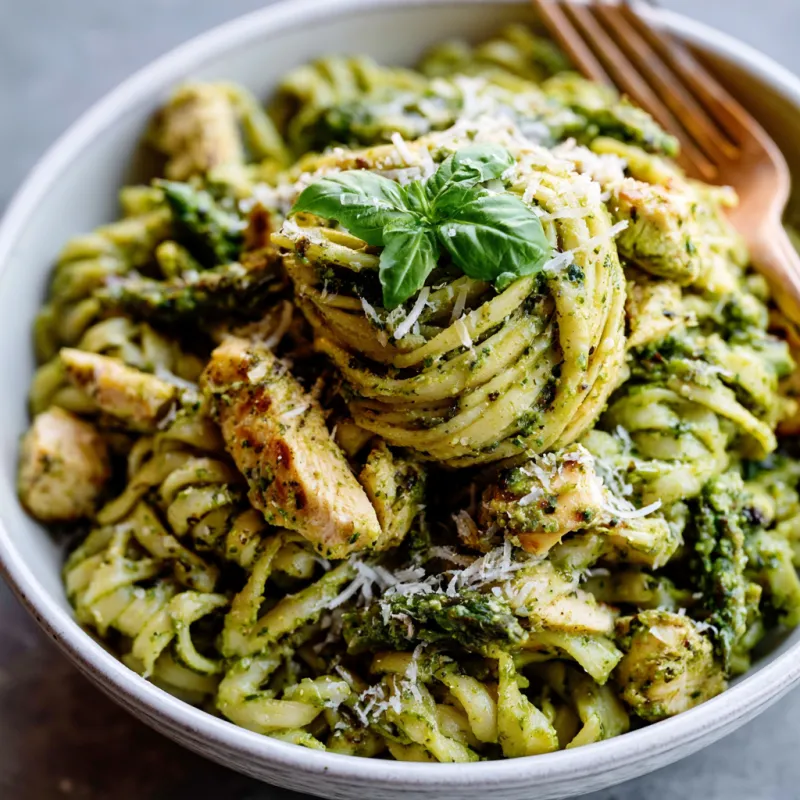
Weeknight Chicken Pesto Pasta
Ingredients
Equipment
Method
- Bring a large pot of salted water to a rolling boil. Add pasta and cook until 1 minute shy of al dente (check package time, subtract 1 minute). Reserve ½ cup pasta water before draining. Drain pasta and set aside.
- While pasta cooks, pat chicken dry with paper towels. Slice each breast horizontally into two even cutlets (about ½-inch thick). Season both sides with ½ teaspoon salt and ¼ teaspoon pepper.
- Heat olive oil in a 12-inch heavy skillet over medium-high heat until shimmering. Lay chicken cutlets in a single layer (work in batches if needed). Cook 3-4 minutes per side until golden brown and internal temperature reaches 165°F. Transfer to a plate and tent loosely with foil.
- Reduce heat to medium. Add sliced garlic to the skillet and cook 30 seconds until fragrant, scraping up any browned bits. Pour in chicken broth and bring to a simmer, stirring constantly to deglaze the pan.
- Whisk in heavy cream (or coconut milk) and pesto until smooth. Simmer 1-2 minutes until slightly thickened. Taste and add remaining ½ teaspoon salt and ¼ teaspoon pepper if needed.
- Add drained pasta and ¼ cup reserved pasta water to the skillet. Toss with tongs over medium heat for 1-2 minutes until the sauce coats each piece of pasta. If too thick, add remaining pasta water a tablespoon at a time.
- Slice the rested chicken across the grain into ½-inch strips. Add chicken and any accumulated juices back to the skillet. Toss gently to combine. Remove from heat.
- Serve immediately, topped with grated Parmesan, pine nuts, and fresh basil if using. Leftovers keep in an airtight container in the fridge for up to 3 days.