
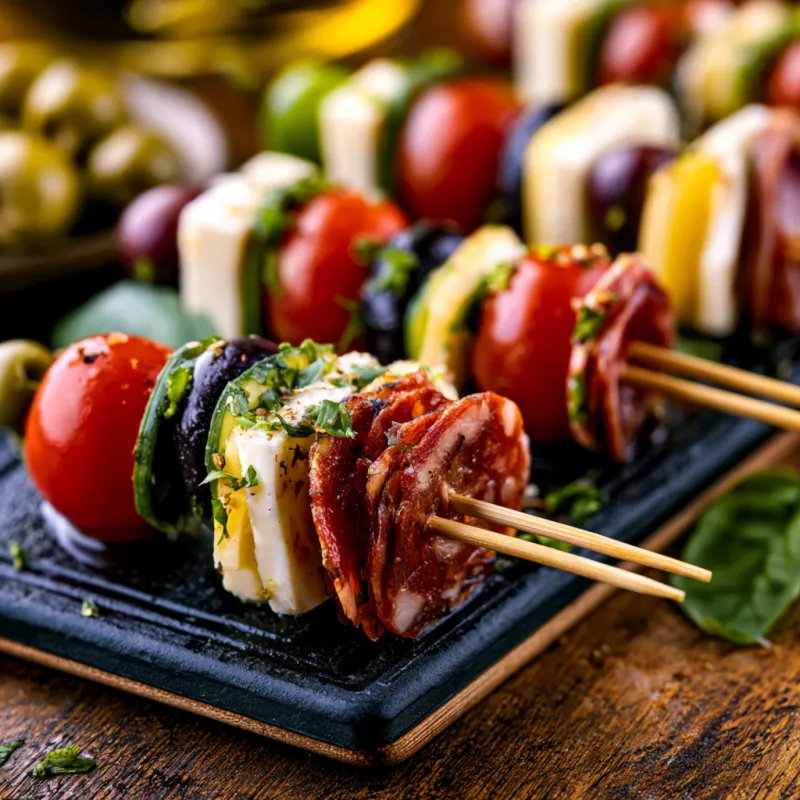
The first time I made antipasto skewers, they fell apart before anyone took a bite. Salami slid down the skewer. Mozzarella wobbled. Basil leaves tore in half. It was a sad little pile on the platter. I knew there had to be a better way — and there is. It comes down to one small technique: how you fold the salami.

Why Folding Matters
A flat slice of salami has no grip. Thread it onto a skewer and it spins freely, pulling everything else down with it. But fold that slice in half, then in half again — into a tight quarter-circle — and you create a wedge that presses against the skewer from two sides. That friction holds the whole stack in place. Test it yourself: thread a flat slice and a folded slice onto separate skewers. Tilt them. The folded one stays put.
Choosing Your Ingredients
You want a mix of textures and flavors. Salty cured meat, creamy cheese, briny olives, tangy artichokes. Genoa salami is my go-to because it folds without cracking. Fresh mozzarella ciliegine — those small cherry-sized balls — are the right size for a single bite. Castelvetrano olives are mild and buttery; if you prefer something sharper, go with Kalamata. Marinated artichoke hearts add acidity that cuts through the richness.
One note on basil: choose large, unblemished leaves. Small or torn leaves won’t hold up. And always thread the skewer through the center vein — that’s the strongest part of the leaf.
The Assembly Order
Start with the folded salami. Push it about an inch from the tip of the skewer — this leaves room for guests to hold it. Next, add the mozzarella. Then an olive. Then a halved artichoke heart, cut side facing outward so it sits flat against the olive. Finally, press a basil leaf against the artichoke and thread the skewer through the vein. The order matters because the heaviest items (mozzarella, artichoke) sit in the middle, balanced by the salami at the base.
The Drying Step You Can’t Skip
Mozzarella is packed in brine. If you thread a wet ball onto a skewer, it acts like a lubricant. Everything slides. Pat each ball dry with a paper towel before you start. This takes 30 seconds and makes the difference between a skewer that holds and one that collapses.
Make-Ahead and Storage
You can assemble the skewers up to 4 hours ahead. Lay them on a platter, cover loosely with plastic wrap, and refrigerate. Do not add the olive oil or balsamic glaze until just before serving — oil makes the basil wilt, and glaze turns sticky in the cold. If you’re serving outdoors, keep the platter in the shade or on ice. These skewers are best at cool room temperature, not straight from the fridge, so let them sit out for 10 minutes before serving.
Serving and Variations
Arrange the skewers on a large wooden board or a white platter. Drizzle with extra-virgin olive oil and a thin ribbon of balsamic glaze. A sprinkle of flaky sea salt and cracked black pepper finishes them. For a twist, swap the salami for prosciutto (fold the same way) or the mozzarella for marinated provolone cubes. Roasted red pepper strips work in place of artichokes. The ratios stay the same: one folded meat, one cheese, one olive, one vegetable, one herb per skewer.
Common Mistakes to Avoid
- Wet mozzarella: Pat it dry. Always.
- Flat salami: Fold it tight. No exceptions.
- Overcrowding the skewer: Five items per skewer is the max. More than that and the skewer gets top-heavy.
- Dressing too early: Oil and glaze go on at the last minute.
These antipasto skewers have become my go-to for parties where I want something that looks impressive but takes almost no effort. They disappear fast — and they stay intact until the last one is picked up.
Frequently Asked Questions
How far ahead can I make antipasto skewers?
You can assemble them up to 4 hours in advance. Keep them covered in the refrigerator, but add the olive oil and balsamic glaze only right before serving to keep the basil from wilting.
Why do my skewer ingredients keep sliding off?
The most common cause is wet mozzarella. Pat the balls dry with a paper towel before threading. Also, folding the salami into a tight quarter-circle creates friction that grips the skewer.
Can I use different meats or cheeses?
Absolutely. Prosciutto (folded the same way), provolone cubes, or pepperoni all work. Just keep the pieces roughly the same size so the skewers look balanced.
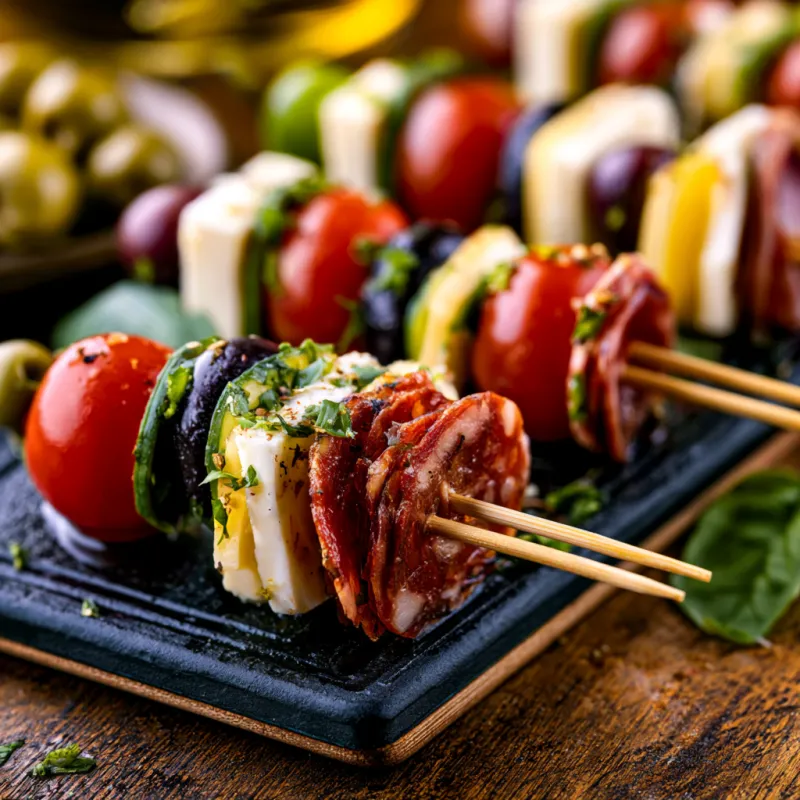
Antipasto Skewers
Ingredients
Equipment
Method
- Fold each salami slice in half, then in half again to form a tight quarter-circle. Set aside.
- Pat mozzarella balls dry with a paper towel. This stops them from making the skewer slippery.
- Spear a folded salami onto a skewer, pushing it about 1 inch from the tip. The fold creates friction against the skewer.
- Add a mozzarella ball, then an olive, then a halved artichoke heart (cut side facing out for a flat surface).
- Press a basil leaf against the artichoke and thread the skewer through its center vein. This keeps the leaf from tearing.
- Repeat with remaining ingredients. Arrange skewers on a platter, leaving a small gap between each.
- Drizzle lightly with olive oil and, if using, balsamic glaze. Sprinkle with flaky salt and pepper. Serve immediately or refrigerate for up to 4 hours.