
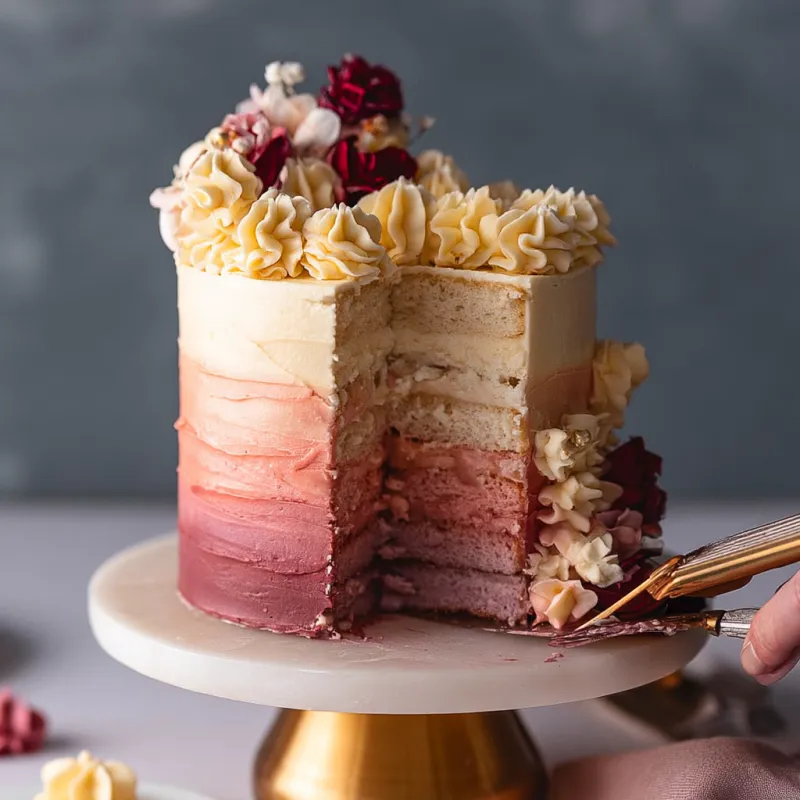
The first time I pulled a cake scraper across a buttercream-covered surface and watched three shades of pink melt into a seamless gradient, I felt a quiet thrill. That moment — when the colors blur just right — is what makes an ombre buttercream cake so satisfying. It looks like a professional baker’s work, but the technique is surprisingly forgiving.

This recipe uses a Swiss meringue buttercream base. It’s less sweet than American buttercream, with a silky, light texture that holds color beautifully without being greasy. The cake itself is a simple vanilla layer cake — tender, moist, and sturdy enough to stack. Together, they create a dessert that’s both elegant and approachable.
The Cake: A Reliable Vanilla Layer
Start with room-temperature ingredients. This isn’t a suggestion — it’s a rule. Cold butter won’t cream properly, and cold milk can seize the batter. Let eggs, butter, and milk sit on the counter for 30 minutes before you begin.
Whisk your dry ingredients separately. This distributes the baking powder and salt evenly, preventing pockets of bitterness or uneven rise. Cream the butter and sugar for a full 4 minutes. You’re looking for a pale, fluffy mixture that looks almost like soft whipped butter. Scrape the bowl halfway through.
Add eggs one at a time. Each should be fully incorporated before the next goes in. If the batter looks curdled at this stage, your eggs were too cold. Don’t worry — it will come together when you add the flour.
Alternate dry and wet ingredients, starting and ending with flour. Mix on low speed just until the flour disappears. Overmixing develops gluten, which makes the cake tough. The batter should be thick, smooth, and slightly glossy.
Divide evenly among three 8-inch pans. I use a kitchen scale for accuracy — about 450 grams per pan. Bake at 350°F (175°C) for 22-26 minutes. The cakes are done when a toothpick inserted in the center comes out clean or with a few moist crumbs. Let them cool in the pans for 10 minutes, then turn out onto wire racks. They must be completely cool before frosting — any warmth will melt your buttercream.
The Buttercream: Swiss Meringue Method
This is where technique matters most. Swiss meringue buttercream starts with egg whites and sugar heated gently over simmering water. The goal is to dissolve the sugar and bring the mixture to 160°F (71°C) — a safe temperature for consuming raw egg whites. Use a thermometer. Don’t guess.
Once heated, whip the mixture on medium-high until it forms stiff peaks and the bowl feels cool to the touch. This takes 8-10 minutes. The meringue should be glossy and firm, not runny.
Switch to the paddle attachment. Add butter cubes one at a time on medium-low speed. The mixture will first deflate, then look curdled and soupy. This is normal. Keep beating. After all butter is added, increase speed to medium and beat for 2 full minutes. The frosting will transform into a silky, spreadable buttercream. Add vanilla and salt at the end.
Divide the buttercream into three bowls. Use gel food coloring — liquid drops will thin the frosting. Dip a toothpick into the gel and swirl it into the buttercream. Add color gradually. For a true ombre, make one bowl pale, one medium, and one deep. The darkest shade should still be a few shades lighter than you want — the color deepens as it sits.
Assembly: Building the Gradient
Level the cake layers with a serrated knife if they’ve domed. Place the first layer on a cake board or turntable. Spread a thin layer of the lightest buttercream on top. Add the second layer, spread with medium buttercream. Top with the third layer and a thin coat of darkest buttercream on top.
Apply a crumb coat — a thin layer of frosting over the entire cake that traps loose crumbs. Use any leftover buttercream or a mix of all three. Chill the cake for 20 minutes. This step is non-negotiable. A cold cake makes the final coat much easier.
For the final ombre effect, fill a piping bag with your three buttercream shades. You can pipe them side by side for a striped effect, or simply spoon each color onto the cake in bands — lightest at the bottom, darkest at the top. Then, with a cake scraper, smooth the sides while spinning the turntable. Pull the scraper from bottom to top in one fluid motion. The colors will blend into a soft gradient. Don’t overwork it — two or three passes is enough.
Chill the finished cake for 30 minutes before serving. This sets the buttercream and makes slicing cleaner.
The Key to Clean Slices
Use a long, sharp knife dipped in hot water. Wipe it dry between cuts. This gives you neat, photogenic slices without dragging the frosting.
Final Takeaway
An ombre buttercream cake is about patience with temperature and color, not perfection. The Swiss meringue base rewards careful technique with a frosting that’s a joy to work with — smooth, stable, and not overly sweet. The gradient effect is forgiving, and even a slightly uneven blend looks intentional and beautiful. Serve it at room temperature for the best texture, and watch your guests’ faces light up when they see that first slice.
Frequently Asked Questions
Can I use American buttercream instead of Swiss meringue?
Yes, but American buttercream is sweeter and less silky. For the ombre effect, it still works — just make sure it’s not too stiff. Add milk a teaspoon at a time if needed.
Why did my Swiss meringue buttercream look curdled?
Don’t panic — this is normal. The butter and meringue emulsion can separate if the mixture is too cold or too warm. Keep beating on medium speed; it will come together into a smooth, silky frosting within a few minutes.
How do I get a clean ombre gradient on the sides?
Pipe each shade onto the cake in bands (lightest at bottom, darkest at top), then smooth with a cake scraper in one continuous upward motion. Chill 15 minutes between layers for sharper lines.
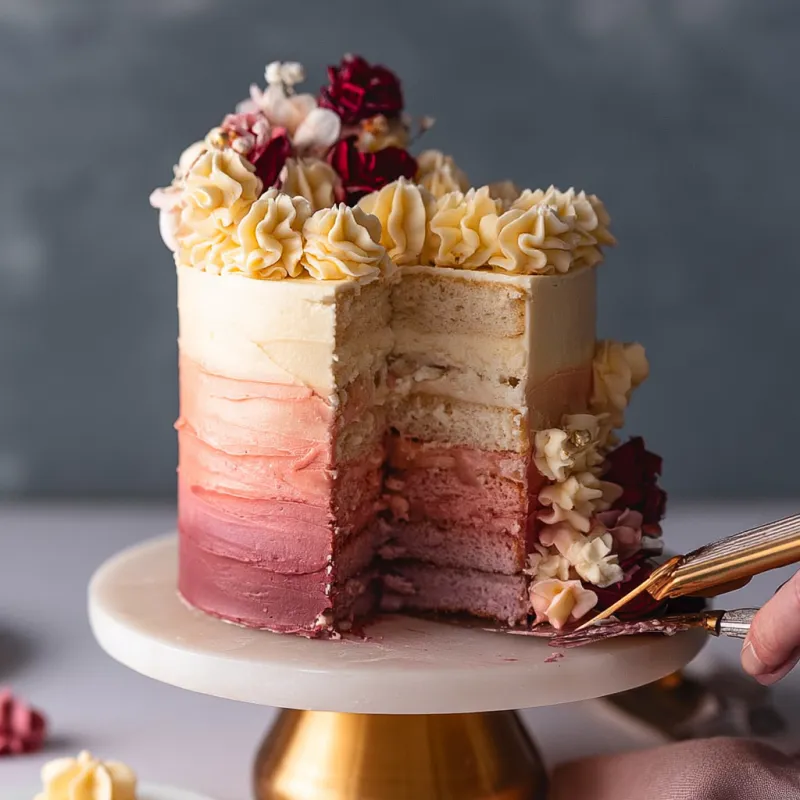
Ombre Buttercream Cake
Ingredients
Equipment
Method
- Preheat oven to 350°F (175°C). Grease three 8-inch round cake pans and line bottoms with parchment paper.
- Whisk flour, baking powder, and salt together in a medium bowl. Set aside.
- In a stand mixer with paddle attachment, cream butter and sugar on medium speed until light and fluffy, about 4 minutes. Scrape bowl.
- Add eggs one at a time, beating well after each. Mix in vanilla.
- Reduce speed to low. Add flour mixture in three additions, alternating with milk in two additions, starting and ending with flour. Mix just until combined — do not overmix.
- Divide batter evenly among pans (about 1 1/2 cups each). Smooth tops.
- Bake 22-26 minutes, until a toothpick inserted in center comes out clean or with a few moist crumbs. Let cool in pans 10 minutes, then turn out onto wire racks to cool completely.
- For buttercream: In a clean heatproof bowl, whisk egg whites and sugar together. Place over a pot of simmering water (not touching water), whisking constantly until sugar dissolves and mixture reaches 160°F (71°C) on a thermometer. This takes 5-7 minutes.
- Transfer mixture to stand mixer bowl with whisk attachment. Whip on medium-high until stiff peaks form and bowl feels cool to the touch, about 8-10 minutes.
- Switch to paddle attachment. With mixer on medium-low, add butter cubes one at a time, waiting until each is incorporated. Mixture may look curdled — keep beating. It will come together. Add vanilla and salt, then beat on medium for 2 minutes until silky and smooth.
- Divide buttercream into three bowls. Tint each with gel food coloring: lightest shade for bottom layer, medium for middle, darkest for top. Use a toothpick to add color gradually — less is more.
- Level cooled cake layers with a serrated knife if domed. Place first layer on a cake board or turntable. Spread a thin layer of lightest buttercream on top. Repeat with medium layer, then darkest. Apply a thin crumb coat over entire cake. Refrigerate 20 minutes.
- For final coat, fill a piping bag with remaining buttercream (keep colors separate or pipe together for a striped effect). Pipe frosting onto cake sides and top, then smooth with a cake scraper while spinning turntable. For a gradient look, scrape from bottom to top in one motion. Refrigerate 30 minutes before serving.